Reliable adhesive application in surface-mount technology (SMT) depends on more than dispensing speed. Material viscosity, deposit size, component clearance, and production volume all influence which needle dispensing valve or jetting method suits a particular assembly.
The most effective selection starts with the application itself: the adhesive’s flow behavior, the required deposit pattern, and the tolerances of the circuit board should determine the equipment configuration. Axxonauto operates in precision fluid dispensing, a field in which these practical factors shape process stability and manufacturing quality.
How to Match the Dispensing Method to the Assembly Task?
SMT assembly involves different adhesive requirements. Some processes need small, isolated dots to secure components before soldering, while others call for controlled beads around edges or material deposits in confined spaces. Defining the required pattern first helps narrow the available dispensing technologies.
Needle-based application delivers fluid through a nozzle positioned close to the substrate. It can be suitable for accessible locations, continuous lines, and materials that require a controlled bead. Its performance depends on needle diameter, stand-off distance, pressure, and the time allowed for each deposit.
Jetting provides another option when the assembly contains many dispensing points or limited clearance around delicate components. Since the nozzle does not need to touch the target surface, the process can reduce mechanical interference and avoid repeated contact movements. However, jetting suitability depends on the fluid’s ability to form stable droplets, so material trials remain important.
How to Evaluate Viscosity and Material Behavior?
Adhesive viscosity is one of the most influential factors in equipment selection. Low-viscosity fluids may flow readily under modest pressure, while thicker materials require greater actuation force and carefully controlled delivery. Temperature can also change flow characteristics, meaning that a material that dispenses consistently in one environment may behave differently under another set of conditions.
The relationship between pressure and deposit volume deserves close attention. Excessive pressure can cause unwanted spreading or inconsistent deposits, whereas insufficient force may result in incomplete delivery. Valve response, nozzle geometry, fluid temperature, and dispensing time must be considered together rather than adjusted in isolation.
For high-viscosity adhesives, conventional pneumatic jetting may not provide the actuation force required by certain applications. Piezoelectric systems designed for thicker fluids offer an alternative, although the actual operating range depends on the material and process settings. During evaluation, manufacturers should check deposit repeatability, startup behavior, stringing, and the stability of the fluid supply over extended runs.
| Method | Suitable for | Main limitation |
| Needle dispensing | Accessible bonding paths, continuous beads | Nozzle contact may disturb nearby parts |
| Jetting | Many dispensing points, limited clearance | Requires stable fluid behavior and droplet formation |
How to Assess Precision, Throughput, and Equipment Integration?
Deposit accuracy should be evaluated against the physical layout of the PCB. Fine-pitch components leave limited space for adhesive placement, while uneven surfaces and varying component heights can affect nozzle access. A useful equipment trial measures the position and dimensions of each deposit, not merely whether the valve releases material.
Production speed requires a similarly broad assessment. A valve with a short dispensing cycle may not improve total throughput if the motion path is inefficient, material replenishment is frequent, or inspection creates a bottleneck. Manufacturers should compare actual cycle times across representative board layouts and include setup, cleaning, and changeover activities in the calculation.
Integration with the wider SMT line also matters. Equipment must accommodate board dimensions, communication requirements, recipe management, and inspection procedures. Monitoring deposit volume and recording process deviations can help engineers identify drift before it causes a larger batch of defects. Maintenance access, replacement parts, and operator training should also factor into the total cost of ownership.
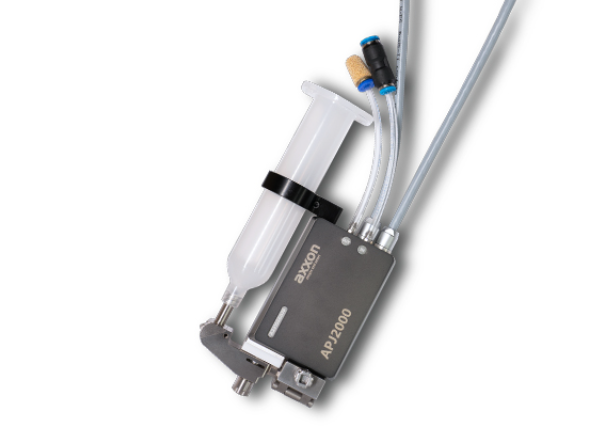
A relevant example is the APJ2000 Piezo Jetting Valve, developed by Axxonauto for higher-viscosity fluids. Its piezoelectric actuation provides twice the force of standard piezo jets, according to the supplied product information, and is intended to support materials and processes that may be difficult for conventional pneumatic jets. Its suitability for a particular SMT task should be confirmed through testing with the intended adhesive, target geometry, and required production rate.
Conclusion
Equipment selection becomes more straightforward once material characteristics, deposit requirements, and line constraints are treated as connected variables rather than separate purchasing criteria. A needle dispensing valve may suit accessible bonding paths, while jetting can offer advantages for repeated deposits and areas where nozzle contact is undesirable.
Before investing in glue dispensing systems, manufacturers should validate performance with real materials and representative boards, including checks for repeatability, maintenance demand, and total cycle time. Axxonauto can be included in that technical evaluation when piezoelectric dispensing is relevant to the application.
FAQs
What Factors Matter Most When Selecting SMT Dispensing Equipment?
The main considerations are adhesive viscosity, deposit dimensions, component spacing, production volume, positioning accuracy, and maintenance requirements. Board-level trials help establish whether the proposed setup meets actual process needs.
Is Needle Dispensing Suitable for High-Viscosity Adhesives?
It can be suitable for some thick materials, provided the valve, needle geometry, and actuation method can deliver the required volume consistently. Testing is necessary because viscosity alone does not determine dispensing performance.
When Is Piezo Jetting Worth Considering?
Piezo jetting may be useful when many small deposits must be placed quickly or when physical nozzle contact could disturb nearby components. High-viscosity applications require particular attention to actuation force and droplet stability.
How Can Dispensing Consistency Be Evaluated?
Manufacturers can measure deposit size, placement deviation, volume variation, startup performance, and defect frequency across repeated cycles. Testing over an extended production run can also reveal changes that a short demonstration may miss.
