For many cyclists, saddle discomfort becomes noticeable only after the first hour on the bike. A ride that starts comfortably can eventually bring pressure around the sit bones, skin chafing, or soreness in sensitive areas. While saddle setup and riding position certainly matter, the chamois inside a pair of bib shorts also has a major influence on how the body feels over several hours.
One detail that is often overlooked is foam density. Density is not the same as thickness, and a thicker pad does not automatically provide better support. The density, layering, shape, and placement of the foam all affect how pressure is handled while a cyclist moves between different riding positions.
For everyday riders, understanding these differences can make choosing cycling bib shorts much easier. Instead of simply looking for the thickest padding, it is more useful to consider how the chamois is constructed and whether its support matches the way you actually ride.
Why Chamois Density Matters In Cycling Bib Shorts
Chamois density describes how much foam material is contained within a specific volume. Lower-density foam generally feels softer, while higher-density foam offers firmer support and can resist compression more effectively. A well-designed chamois can combine different densities instead of using one type of foam throughout the entire pad.
This approach makes sense because pressure is not evenly distributed when cycling. The sit bones carry substantial load, particularly in a more upright riding position. As the rider leans farther forward, pressure can shift toward the perineal area. A single-density pad may therefore struggle to provide the same level of support across every position.
Multi-density construction allows different sections to perform different jobs. Softer outer foam can create a smoother transition against the body, while denser foam underneath provides more stable support. The result is a pad that can feel cushioned without simply becoming thicker.
This distinction matters during longer rides. A soft pad may initially feel comfortable but compress under continuous pressure. Once that happens, the rider can begin to feel the saddle more directly. A properly selected high-density support zone can help maintain its structure for longer.
Why More Padding Does Not Always Mean More Comfort
It is easy to assume that thicker padding will automatically reduce saddle pain. In practice, excessive thickness can sometimes make a garment feel bulky or interfere with natural movement. The goal of a chamois is not to create a thick barrier between the cyclist and saddle, but to manage pressure while allowing the rider to move naturally.
The shape of the pad is equally important. Edges and transitions need to follow the body without creating hard pressure points. A poorly shaped pad can rub against the skin as the legs move, potentially contributing to chafing even when there is plenty of cushioning.
The surface also influences comfort. A perforated chamois structure can improve airflow within the pad and may support moisture and heat management. This becomes particularly useful during spring and summer rides, when sweat can increase friction between the skin and clothing.
The pad must also stay in position. If it shifts during pedaling, the areas intended to provide support may no longer line up with the body. This is why chamois performance should always be considered together with the construction of the entire garment.
How Men’s Cycling Bib Shorts Keep The Chamois Stable
A chamois performs more consistently when it stays in the intended position during riding. Bib straps, leg grippers, fabric stretch, panel construction, and stitching all contribute to garment stability.
When comparing men’s cycling bib shorts, cyclists should therefore look beyond the foam specifications. A secure fit helps limit excessive movement as the rider pedals, stands, climbs, or changes position. Stable clothing can reduce the repeated adjustments that often become distracting on longer rides.
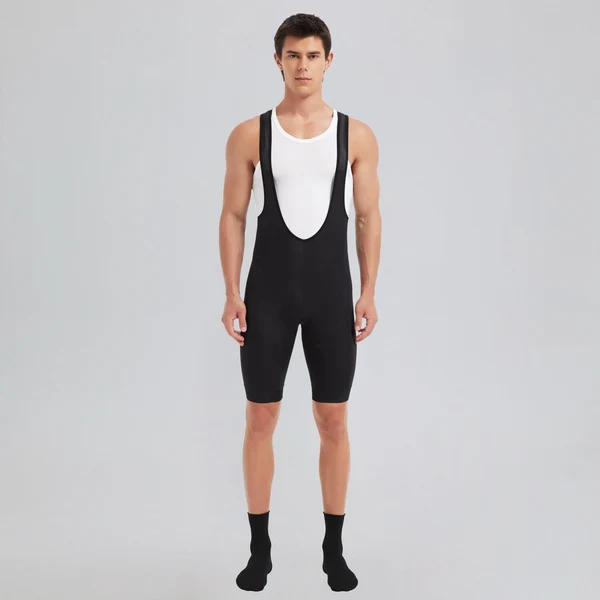
For example, Przewalski’s Classic Bib Shorts feature an 18 mm zoned chamois engineered for up to four-hour rides across road, gravel, trail, and training applications. The perineal section utilizes a three-layer 30 + 90 + 30 kg/m³ structure to relieve pressure, while the sit-bone area features a four-layer 30 + 90 + 90 + 30 kg/m³ construction with a double 90 kg/m³ high-density core to prevent bottoming out.
Complementing the chamois, the garment incorporates a perforated pad surface for ventilation, a 12-panel anatomical cut, 6 cm breathable mesh bib straps, and 6 cm silicone leg grippers. These elements maintain precise garment positioning, reduce unwanted fabric bunching, and limit excessive movement during pedaling.
The design also includes a perforated chamois surface for airflow, a 12-panel cut, breathable 6 cm mesh bib straps, and 6 cm silicone leg grippers. These details work together to keep the garment stable while supporting movement during a ride.
Choosing The Right Chamois For Your Riding Habits
There is no single chamois density that will feel perfect for every cyclist. Body shape, saddle design, riding posture, terrain, and ride duration all influence comfort.
Someone who mainly rides for an hour around town may not need the same level of structured support as a cyclist who regularly spends three or four hours on the road. Riders who switch between upright and forward-leaning positions may also benefit from a chamois designed with multiple pressure zones.
Fit should be considered before focusing too heavily on density. If bib shorts are too loose, the chamois can move and create friction. If they are too tight, the fabric or straps may create unnecessary pressure. The best garment should stay secure without restricting normal movement.
What To Look For Beyond Foam Density
Density is useful information, but it should not be treated as a standalone quality score. When comparing bib shorts, cyclists can also examine chamois thickness, pressure-zone construction, ventilation, fabric stretch, stitching, and the stability of the leg openings.
For everyday riding, these practical details should be considered alongside technical specifications rather than used as secondary factors. A chamois that remains stable, manages moisture, and provides consistent support can make a greater difference to comfort than simply choosing the thickest available pad.
Przewalski Bib Shorts For Everyday Cycling
Przewalski bib shorts are designed around practical riding needs, with the company’s current range covering different riding durations and applications. Understanding the differences between chamois density, thickness, and zoned construction gives cyclists a more useful way to compare these options and select equipment according to their own riding habits.
Overall comfort depends on how the garment works with the rider, as well as factors such as saddle setup and riding position. When the padding supports the right areas, stays in position, and allows natural movement, cyclists can spend more time thinking about the road ahead and less time noticing pressure and friction.
