Selecting the right material for additive manufacturing determines the structural viability and ultimate success of a physical part. Different functional environments demand vastly distinct physical attributes, ranging from flexibility to high thermal threshold limits. Exploring various 3D filament types allows designers to match specific mechanical properties to their intended designs.
Thermoplastics react uniquely during the heating, extrusion, and subsequent cooling phases of a desktop fabrication cycle. Analyzing how these polymers deform under continuous load helps operators optimize their hardware settings for functional or industrial builds. A deeper exploration of material science reveals which option truly suits a particular mechanical application.
Understanding the Properties of Polylactic Acid
Polylactic acid stands out as an exceptionally user-friendly thermoplastic derived from renewable resources like cornstarch. This organic background makes the polymer highly popular for indoor desktop setups due to its minimal odor emissions. The molecular chains shrink very little as they cool, which actively prevents physical warping on expansive flat bases.
This material transitions fluidly from a solid to a liquid state at relatively modest extrusion temperatures. The low printing temperature means standard hardware setups can handle it without needing specialized enclosed build chambers. Rapid solidification helps the plastic maintain crisp details, making it ideal for highly intricate cosmetic models.
Analyzing the Toughness of Acrylonitrile Butadiene Styrene
Acrylonitrile Butadiene Styrene is a petroleum-based engineering polymer widely appreciated for its impact resistance and structural toughness. The inclusion of butadiene rubber particles allows the material to absorb heavy physical shocks without shattering apart. This structural resilience makes it a preferred choice for functional housings, gears, and durable mechanical assemblies.
However, this robust polymer exhibits a high thermal expansion coefficient, causing significant contraction as it cools. Without a fully enclosed printing chamber to regulate ambient temperatures, the edges of a model can lift drastically. Managing this thermal stress is crucial for achieving dimensional accuracy during demanding industrial print runs.
Evaluating the Resilience of Copolyesters
Polyethylene terephthalate glycol bridges the gap between ease of use and high mechanical strength for functional components. The addition of glycol prevents the base polymer from crystallizing, resulting in a highly clear and flexible raw material strand. It offers exceptional impact resistance alongside excellent chemical stability against common household oils.
This versatile material adheres tightly to the build surface, creating incredibly strong bonds between successive layers. It stands up well to outdoor moisture, making it a favorite for mechanical brackets and functional prototypes. Balancing durability with printability makes it a popular staple in modern prototyping workshops.
Exploring Extreme Engineering Plastics for Industrial Needs
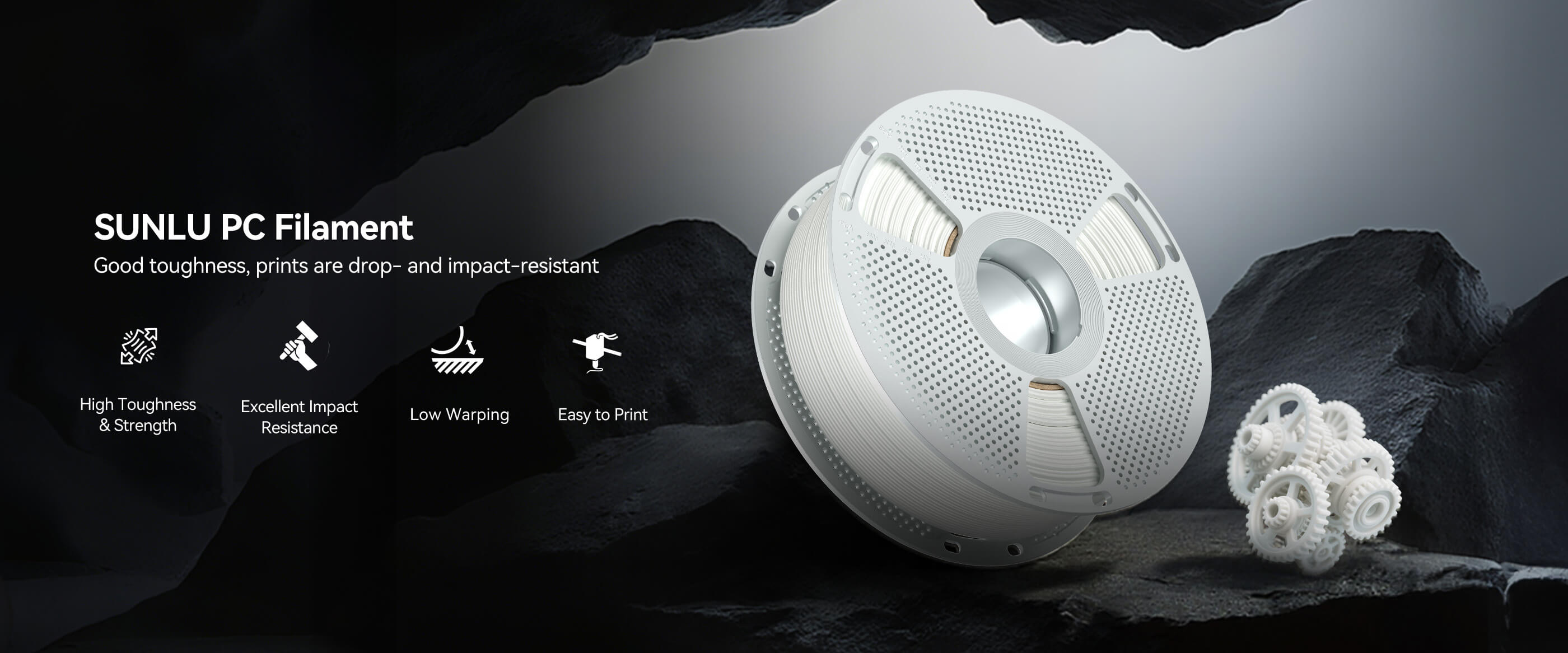
Specialized industrial projects often require extreme mechanical characteristics that go far beyond standard visual dense plastics. To satisfy these demanding technical requirements, the engineering team at SUNLU provides a specialized PC formulation for advanced makers. This unique polycarbonate material is engineered as a high-toughness, high-strength, and heat-resistant engineering plastic.
The advanced blend offers excellent impact resistance, making it suitable for functional parts that endure immense mechanical stress. This heavy-duty option from SUNLU allows for the creation of rugged structural components that resist physical deformation under load. Utilizing this advanced polymer elevates the mechanical performance of everyday desktop manufacturing to an industrial tier.
Navigating Strict Thermal Requirements for Polycarbonate
Extruding high-performance polycarbonate requires specific hardware considerations to handle the elevated temperatures needed for proper flow. The material typically demands hotend temperatures exceeding two hundred and seventy degrees Celsius to achieve optimal liquid viscosity. A highly stable all-metal hotend is mandatory to safely sustain these extreme thermal profiles.
Additionally, a fully enclosed print chamber is highly recommended to trap ambient heat and prevent rapid cooling. Controlled cooling active profiles stop the polymer layers from contracting too quickly, reducing internal stresses and preventing cracking. These strict environmental parameters ensure that the structural integrity of the high-strength prototype remains uncompromised.
Sourcing Consistent Materials for Structural Predictability
Achieving uniform outer walls is vital for ensuring that stress is distributed evenly across the geometry of a model. Sourcing a high-quality 3D print filament guarantees a steady volumetric flow throughout the entire build cycle. Inconsistent strand thickness forces the nozzle to under-extrude, creating weak internal spaces that cause premature cracking.
Strict manufacturing controls keep the strand diameter within a highly precise tolerance window across the entire spool. This precision prevents sudden material jams that could ruin a long, high-temperature engineering print run. Consistent material dimensions translate directly to stronger, more reliable parts capable of enduring heavy operational loads.
Navigating Storage and Moisture Mitigation Strategies
All high-grade desktop engineering thermoplastics naturally absorb ambient moisture from the surrounding air over extended storage periods. Polycarbonate is particularly hygroscopic, meaning it traps water molecules rapidly if left unprotected in a workshop. This trapped moisture vaporizes violently inside the heated nozzle, causing severe bubbling, popping, and structural flaws.
Keeping active spools sealed inside airtight containers filled with fresh desiccant packs shields them from gradual humidity damage. Utilizing dedicated material drying ovens actively extracts trapped moisture to restore the original mechanical properties of the polymer. Dry material flows with optimal viscosity, resulting in cleaner finishes and stronger inter-layer bonding.
Conclusion
Choosing the right engineering polymer depends on balancing ease of fabrication against demanding real-world physical requirements. Evaluating various 3D filament types helps creators identify the perfect material for structural or high-temperature success. SUNLU’s consistently high-strength product portfolio delivers exceptional dimensional accuracy and long-term structural reliability—engineered for demanding applications.
