Commercial environments rely on clear visual communication to help visitors identify businesses, understand their surroundings, and locate relevant services. Choosing the right sign involves more than adding a light source; placement, viewing distance, ambient lighting, and installation conditions all influence performance. An illuminated light sign box can support these requirements by combining visible graphics with integrated lighting. For businesses planning retail, hospitality, transportation, or corporate signage, understanding where these displays work best helps align signage design with practical communication needs.
Retail Storefronts and Shopping Streets
Storefronts are among the most suitable locations for illuminated displays because businesses must communicate their identity to pedestrians and passing traffic. A carefully positioned illuminated light sign box can present a store name, promotional message, or brand graphic while maintaining visibility after daylight fades.
Design decisions should reflect the storefront’s dimensions, surrounding architecture, and typical viewing angles. Slim acrylic models can suit compact retail entrances, while double-sided formats may be appropriate for projecting signs viewed from different directions. The illuminated signage should complement the main storefront identity rather than compete with window displays, architectural details, or other nearby signs.
Shopping Malls and Indoor Retail Areas
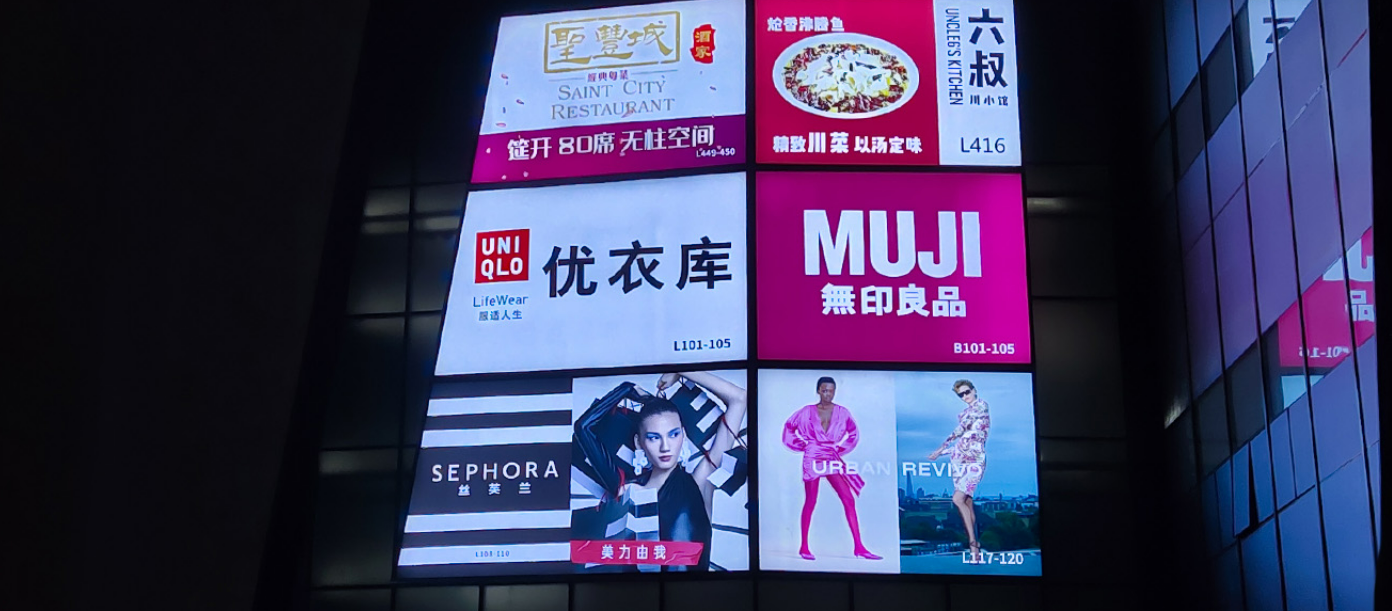
Shopping malls bring together multiple brands, shared circulation spaces, and competing visual messages. Light boxes can help individual stores establish recognizable identities while supporting promotional displays in corridors, entrances, and designated advertising areas.
A well-planned illuminated light sign box can feature product imagery, seasonal campaigns, or brand graphics without requiring a completely different sign structure for each update. Fabric light boxes with replaceable graphics can be useful where campaigns change regularly, while acrylic designs may suit applications that require a more rigid display surface.
For mall operators and retailers, consistency matters. The illuminated signage should remain readable under existing ceiling lights, fit the available mounting space, and comply with property requirements for installation and electrical connections.
Hotels and Hospitality Venues
Hotels use signage to establish their identity and help guests navigate entrances, reception areas, restaurants, and shared facilities. Illuminated displays can make a property name easier to identify at night, particularly when the building entrance faces a busy road or a large pedestrian area.
An illuminated light sign box can be mounted on a wall, positioned above a reception desk, or incorporated into a designated advertising area. Material selection should reflect the environment: acrylic may provide a clean, rigid display face, whereas fabric systems can accommodate large graphics with a minimal-frame appearance.
Within hospitality spaces, illuminated signage should reinforce the property’s visual identity while maintaining appropriate brightness. Designers should also consider interior finishes, viewing distance, maintenance access, and the atmosphere expected in each area.
Airports, Metro Stations, and Transportation Hubs
Transportation facilities require signs that communicate information quickly to people moving through unfamiliar spaces. Light boxes can support directional information, service notices, advertising, and branded displays in terminals, station corridors, and entrance zones.
An illuminated light sign box is particularly useful where signs must be read under varying ambient-light conditions or from more than one approach direction. Double-sided designs may suit suitable suspended or projecting installations, while wall-mounted formats can fit defined information zones.
The effectiveness of illuminated signage depends on more than brightness. Text size, contrast, symbols, mounting height, and consistency with the wider wayfinding system all affect comprehension. Project teams should coordinate sign placement with accessibility requirements, local regulations, and the transport operator’s established information standards.
Restaurants, Cafes, and Food Service Counters
Restaurants and cafes use visual displays to communicate menus, featured products, prices, and brand identity. Illuminated menu panels can make selected information easier to see in busy service areas, while exterior displays can identify an entrance or highlight a restaurant’s presence along a commercial street.
An illuminated light sign box can accommodate menu photography, product promotions, and branded graphics. Compact rigid panels may work well above counters, while larger fabric displays can suit wider walls where the design requires a continuous visual surface.
Operators should plan graphic layouts around how customers make decisions. Essential information needs sufficient contrast and readable typography, and frequently updated menus require a practical replacement process. The illuminated signage should support ordering and navigation without creating glare or obstructing staff and customer movement.
Office Buildings and Corporate Reception Areas
Corporate offices use signage to present company names, identify entrances, and create consistent branding across reception areas and shared facilities. A light box can provide a defined display surface for a corporate logo, business name, or carefully selected brand graphic.
For interior applications, an illuminated light sign box can be installed behind a reception desk, along a lobby wall, or near an entrance where visitors first encounter the organization. Acrylic finishes can suit structured corporate interiors, while fabric displays may be appropriate for larger graphic presentations.
Placement should remain consistent with the building’s architectural design and lighting scheme. An effective illuminated signage installation communicates identity clearly without overwhelming reception staff, visitors, or other environmental information.
Trade Shows, Exhibitions, and Promotional Displays
Exhibition stands often operate within large halls containing many competing displays. Backlit graphics can help exhibitors define their booth, organize product information, and establish a recognizable brand presentation from the aisle.
A light box can be selected according to stand dimensions, transportation requirements, assembly arrangements, and the frequency of graphic changes. Fabric light boxes are worth considering for large-format displays, while ultra-thin designs may be suitable where available space is limited.
Exhibitors should evaluate how graphics will appear under venue lighting and whether the display can be assembled, maintained, and transported efficiently. Coordinating the frame, illumination, printed material, and mounting method helps create a consistent presentation across different events.
Selecting the Right Location and Signage Partner
The best application depends on the communication objective, the physical environment, and the expected maintenance routine. Outdoor installations require suitable weather-resistant construction, while indoor projects may prioritize slim profiles, replaceable graphics, and integration with existing interiors. Electrical access, mounting conditions, viewing angles, and local requirements should be assessed before specifications are finalized.
COSUN SIGN offers light box options including dynamic, ultra-thin, soft film, fabric, full acrylic, welded, retail menu, and double-sided designs. Its product range includes LED-lit solutions for retail, commercial branding, and wayfinding applications. By matching the display format, materials, and installation requirements to the project, businesses can develop illuminated signage that serves a clear operational purpose and supports a consistent brand identity.
