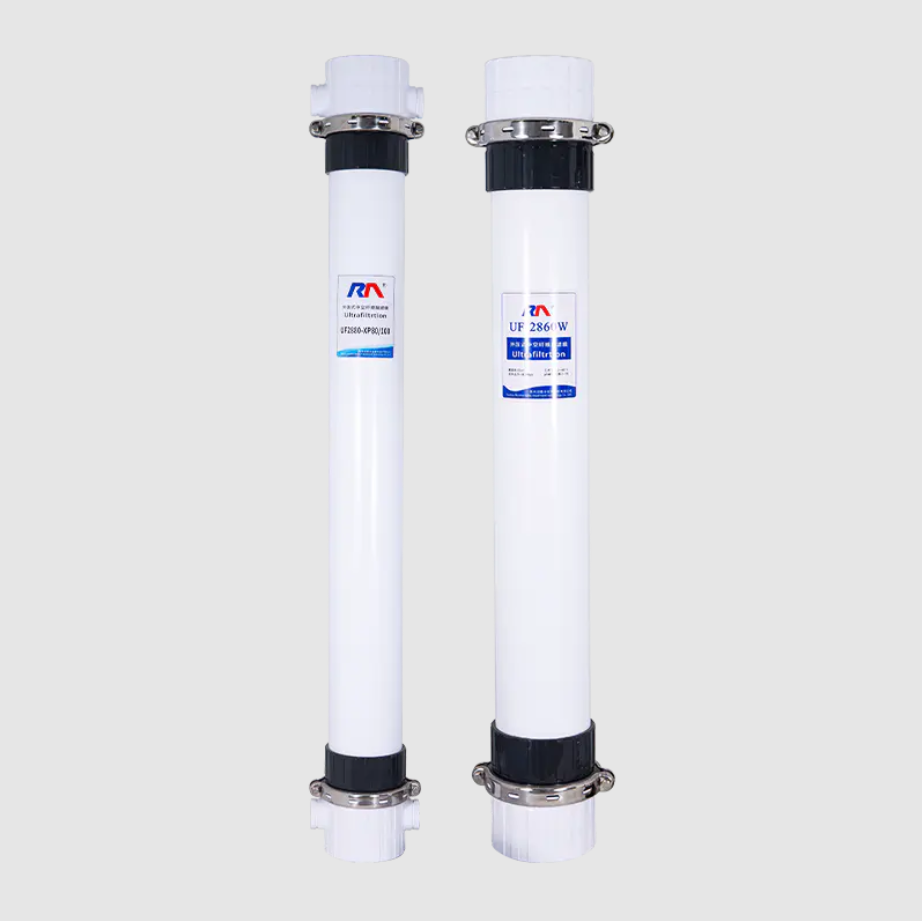
Ultrafiltration is widely used when water treatment needs to remove suspended solids, microorganisms, colloids, and fine particles before later treatment stages. Performance depends on pore size, membrane material, module structure, cleaning method, feed water conditions, and operating control. These factors also influence maintenance planning and long-term operating cost.
The term PVDF UF membrane refers to an ultrafiltration membrane made from polyvinylidene fluoride. PVDF is valued because it offers chemical stability, oxidant resistance, and useful flexibility. These properties help the membrane handle filtration work and periodic chemical cleaning in industrial water systems.
Why Membrane Material Matters
Membrane material affects long-term operation. Water treatment plants may face changing feed water quality, organic fouling, microbial growth, and suspended solids. These conditions can reduce water flux when the membrane surface is not cleaned correctly.
Chemical cleaning is therefore part of normal ultrafiltration maintenance. Oxidants such as sodium hypochlorite can be used to control biological fouling. The membrane material needs enough chemical resistance to tolerate repeated cleaning cycles.
PVDF has stronger oxidant resistance than polyethersulfone, polysulfone, and related materials. This gives operators more room to manage cleaning without exposing the membrane to rapid chemical damage.
Flexibility also matters. Membrane fibers can face mechanical stress during filtration and cleaning. Good flexibility helps reduce the risk of fiber breakage under suitable operating conditions.
How Ultrafiltration Supports Water Quality
Ultrafiltration works through physical separation. Water passes through membrane pores while larger particles are retained. The process can remove suspended particles, microorganisms, colloids, pathogens, and bacteria from the treated stream.
It is often used before later purification stages or in process water systems. Reducing particulate loading can help downstream equipment work under more stable conditions.
Flux is another design point. High porosity can support higher water passage, but the selected operating flux still needs to match feed water quality and cleaning frequency. Excessive loading can increase fouling and shorten cleaning intervals.
For B2B buyers, water quality should be reviewed together with operating cost. Purchase price alone does not show long-term value. Cleaning demand, replacement frequency, downtime, and delivery schedule can also affect project cost.
Cleaning, Fouling, and Module Structure
Fouling develops gradually on the membrane surface. Organic matter, suspended particles, and microorganisms can increase resistance to water flow. Regular cleaning helps recover flux and keeps filtration closer to the planned operating range.
In an outside-in structure, feed water contacts the outer surface of the fibers before filtered water passes inward. This structure provides a larger filtering area and supports pollution interception and cleaning.
Hydrophilic modification can improve pollution resistance. It changes the membrane surface characteristics and can support more stable filtration under suitable operating conditions. Cleaning is still necessary during long-term use.
Cleaning intervals should be based on pressure, flux decline, feed water quality, and system design. Monitoring these factors gives operators a clearer basis for deciding when maintenance is needed.
Product Features in Practical Use
For projects that need an outside-in configuration, Runmo supplies PVDF ultrafiltration membrane elements made from polyvinylidene fluoride. Their design focuses on chemical stability, oxidant cleaning resistance, high porosity, fiber strength, flexibility, and hydrophilic modification.
The product is designed to tolerate oxidant cleaning, including sodium hypochlorite. According to the supplied product information, PVDF can withstand oxidants at a level more than ten times that of polyethersulfone, polysulfone, and related materials. This can be useful where repeated chemical cleaning is required.
The element also uses an external pressure structure. This supports a larger filtering area and makes surface fouling easier to remove. Its small nominal pore size helps remove suspended particles, microorganisms, colloids, pathogens, and bacteria.
This type of PVDF UF membrane can be used in pure water preparation, boiler recharge water, food processing, pharmaceutical manufacturing, and sewage treatment. Final selection should still consider feed water quality, required capacity, pretreatment, and cleaning plans.
What Buyers Should Compare
Selection should start with the actual water source. Surface water, industrial process water, wastewater, and pretreatment water can contain different foulants. Their suspended solids, organic content, microbial load, and chemical composition affect the operating strategy.
Buyers should compare quality, price, and delivery time together. Lower purchase cost may not help if replacement is frequent or if project delivery is delayed. Product consistency and supply planning matter to engineering companies and water treatment solution providers.
Technical information should also be reviewed before purchase. Useful points include membrane material, flow direction, module structure, chemical cleaning tolerance, application range, and operating recommendations.
Pilot testing can be useful for difficult water sources. Small-scale trials can show how quickly fouling develops, how cleaning restores flux, and whether the selected membrane fits the expected operating cycle.
Practical Considerations for PVDF Ultrafiltration
PVDF ultrafiltration is used because it combines fine particle removal with chemical resistance and mechanical flexibility. Its value becomes clearer when the membrane is matched with suitable pretreatment, realistic flux settings, regular cleaning, and proper monitoring.
Runmo serves water treatment businesses, engineering companies, and solution providers with outside-in PVDF ultrafiltration membrane elements for industrial applications. They focus on filtration performance, cleaning resistance, material strength, and project supply. Buyers planning a new treatment system or membrane replacement can contact them to discuss water conditions, pricing, delivery needs, and suitable membrane options.
