Modern industrial facilities rely on increasingly complex electrical equipment, including variable frequency drives, automation systems, and power electronic devices. These loads improve operational efficiency but can also create challenges related to reactive power and electrical disturbances.
Traditional capacitor banks have long been used for reactive power correction, while active filters provide advanced solutions for current distortion and harmonic mitigation. Combining these technologies creates a hybrid reactive power compensation approach that addresses multiple electrical challenges simultaneously.
For companies evaluating power quality problems and solutions, hybrid systems offer a practical method to improve electrical stability, optimize equipment performance, and support more reliable industrial operations. Enjoypowers develops power quality solutions designed to help industrial users manage changing electrical loads with more flexible compensation technologies.
Understanding the Role of Reactive Power Compensation in Industrial Systems
Reactive power is an important component of AC electrical systems because many industrial devices require it to create magnetic fields for operation. Motors, transformers, and other inductive loads can consume reactive power, which may increase current flow and reduce overall system efficiency.
Capacitor banks are commonly applied to compensate for reactive power demand. By supplying reactive power locally, capacitor banks can reduce unnecessary current circulation and improve the power factor of electrical systems.
However, industrial power environments have become more complicated. Modern facilities often include nonlinear loads that draw current in irregular waveforms. These conditions require more advanced methods because reactive power compensation alone may not address all electrical issues.
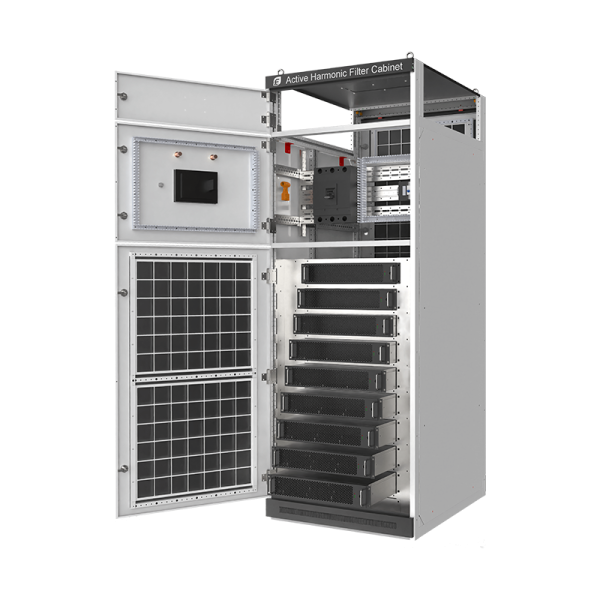
This is where active filters become valuable. Active filters monitor electrical conditions and generate compensating currents to reduce unwanted current components. When combined with capacitor banks, they create a coordinated solution for both reactive power management and power quality improvement.
How Hybrid Compensation Combines Capacitor Banks and Active Filters
A hybrid reactive power compensation system combines the strengths of passive and active technologies. Capacitor banks provide economical reactive power support, while active filters handle dynamic disturbances caused by changing loads.
In a typical industrial application, capacitor banks manage stable reactive power requirements from motors and other inductive equipment. At the same time, active filters respond quickly to variations in electrical conditions and help control current distortion.
This combination allows facilities to achieve more comprehensive electrical management. Instead of relying on a single technology, hybrid systems provide a balanced approach that adapts to different operating conditions.
For users researching power quality problems and solutions, understanding the difference between fixed compensation and dynamic compensation is important. Capacitor banks are effective for predictable reactive power requirements, while active filters are better suited for environments where loads change frequently.
What Causes Harmonic Distortion in Industrial Power Systems?
Many industrial users ask what causes harmonic distortion because harmonic issues can affect equipment operation, energy efficiency, and electrical reliability. Harmonic distortion occurs when electrical currents or voltages deviate from their ideal sinusoidal waveform.
One major source of harmonic distortion is the increasing use of power electronic equipment. Devices such as variable speed drives, uninterruptible power supplies, and switching power converters can introduce nonlinear current patterns into electrical networks.
Unlike traditional electrical loads that draw current smoothly, nonlinear loads absorb electricity in pulses. These irregular current patterns create harmonic components that can spread through the power distribution system.
Other factors contributing to harmonic distortion include poorly balanced electrical systems, large concentrations of electronic equipment, and rapidly changing industrial processes. Identifying the sources of distortion is essential before selecting an appropriate compensation method.
Active filters are designed to address these conditions by detecting harmonic currents and producing compensating currents with opposite characteristics. This helps reduce the impact of harmonics on the overall electrical system.
Benefits of Hybrid Reactive Power Compensation for Industrial Users
Hybrid compensation provides several practical advantages for industrial facilities seeking better electrical performance. One key benefit is improved adaptability. Since industrial loads often change throughout the day, a system that combines passive and active technologies can respond more effectively.
Another advantage is improved equipment protection. Excessive harmonics and poor power factor conditions may place additional stress on transformers, motors, and distribution components. Managing these electrical problems can contribute to more stable equipment operation.
Hybrid systems can also support energy management goals by reducing unnecessary current flow and improving the utilization of existing electrical infrastructure. For facilities with sensitive production equipment, maintaining stable power conditions is often an important operational requirement.
Enjoypowers provides industrial power quality technologies that integrate advanced compensation methods for different application environments. Through proper system design, companies can select solutions that match their electrical characteristics and operational needs.
Selecting the Right Hybrid Compensation Solution
Before implementing a hybrid reactive power compensation system, industrial users should evaluate several factors. The first step is understanding the existing electrical environment, including load types, operating patterns, and the main sources of power disturbances.
A detailed power quality assessment can help identify whether the primary challenges involve reactive power demand, harmonic currents, voltage fluctuations, or a combination of these issues.
System capacity is another important consideration. The compensation equipment should match the facility’s electrical requirements and allow sufficient flexibility for future expansion.
Professional system planning is also necessary because different industrial applications have different requirements. Manufacturing plants, data centers, renewable energy facilities, and other commercial environments may experience different power quality challenges.
By combining capacitor banks with active filters, hybrid solutions provide a versatile approach for facilities that require both reactive power compensation and harmonic management.
The Future of Industrial Power Quality Management
As industrial systems continue to adopt automation, digital technologies, and power electronic equipment, electrical networks are becoming more dynamic. This trend increases the importance of advanced power quality management strategies.
Hybrid reactive power compensation represents a transition from traditional correction methods toward more intelligent electrical management. By combining established capacitor technology with active filtering capabilities, industries can address a wider range of electrical challenges.
For organizations exploring power quality problems and solutions, hybrid compensation offers a practical pathway to managing both current and future electrical demands. Enjoypowers continues to focus on developing solutions that support reliable and efficient industrial power systems.
Conclusion
Hybrid reactive power compensation combines capacitor banks and active filters to provide a comprehensive approach to industrial electrical management. Capacitor banks support reactive power correction, while active filters help manage harmonic-related challenges and changing load conditions.
Understanding what causes harmonic distortion and how different compensation technologies work allows industrial users to make more informed decisions about power quality improvements.
As electrical systems become more complex, integrated solutions will play an increasingly important role in maintaining stable, efficient, and reliable industrial operations. Through advanced power quality technologies, Enjoypowers helps businesses address modern electrical challenges with practical and flexible solutions.
