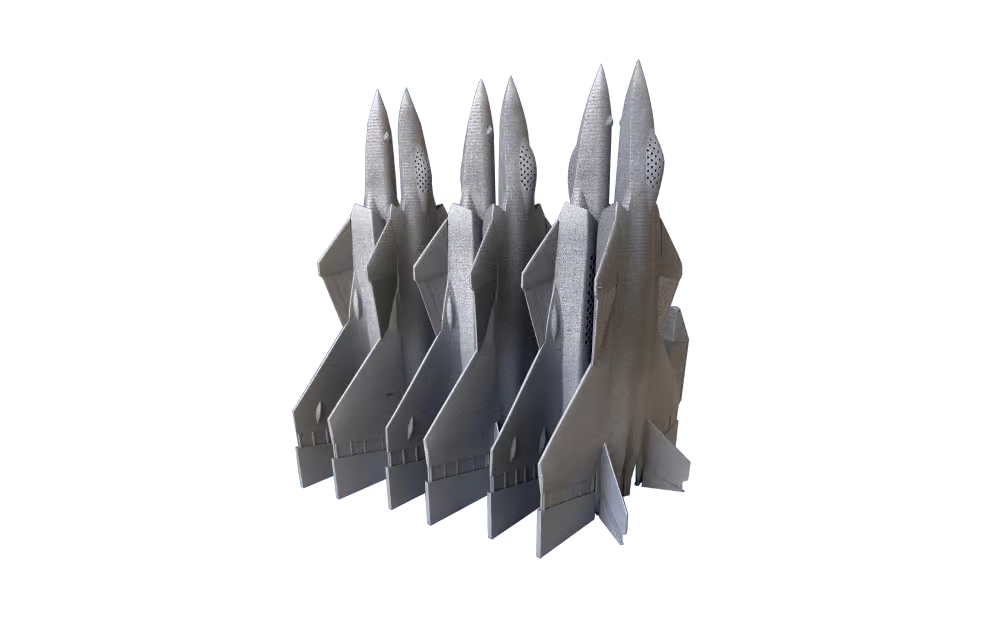
Industrial metal additive manufacturing allows engineering teams to construct complex geometries that traditional milling or casting cannot easily produce. By melting metallic powder layer by layer, selective laser melting (SLM) enables lightweight structures, internal cooling channels, and consolidated assemblies. However, component performance depends heavily on choosing the correct alloy.
Selecting an alloy for 3d printed metal parts requires evaluating mechanical loads, environmental exposure, thermal demands, and manufacturing behavior. A mismatch in material properties can lead to part distortion, premature fatigue failure, or unacceptable surface roughness. Engineering managers and procurement specialists must assess key technical criteria when specifying metals for additive production.
Essential Criteria for Industrial Alloy Selection
- Mechanical Performance Demands
The primary consideration for any load-bearing part is its yield strength, tensile strength, and fatigue limit. High-stress structural brackets often require titanium alloys, whereas wear-resistant components benefit from cobalt-chromium or tool steel. Ductility and impact toughness must also match operational conditions to prevent sudden fracture under cyclic loading.
- Thermal and Corrosion Resistance
Operating environments dictate chemical composition requirements. Components exposed to elevated temperatures or corrosive fluids need specialized alloys. Stainless steel 316L offers reliable corrosion resistance in moist or acidic conditions. Meanwhile, nickel-based superalloys maintain structural integrity at elevated temperatures, making them suitable for hot gas passages and heat exchangers.
- Thermal Conductivity and Residual Stress
Metal powders exhibit varying levels of laser energy absorption and thermal dissipation. Alloys with lower thermal conductivity tend to retain localized heat, increasing thermal gradients across the build plate. This thermal accumulation can build up residual stresses, leading to geometric warping or detachment from support structures. Proper substrate preheating and optimized scanning routines help manage these stresses during the build process.
Overview of Common Industrial Metal Powders
Titanium Alloys (Ti-6Al-4V / Grade 23): Titanium alloys provide exceptional strength-to-weight ratios and high fatigue resistance. They are widely used in aerospace structural brackets, automotive racing components, and orthopedic medical implants.
Cobalt-Chromium (Co-Cr): Known for superior hardness, wear resistance, and long-term biological inertness, Co-Cr is a primary choice for dental restorations, oral frameworks, and specialized joint wear surfaces.
Stainless Steel (316L / 17-4PH): Stainless steel balances high mechanical strength with straightforward printability. It serves as an economical choice for functional prototypes, surgical tools, and general industrial housings.
Tool Steels (H13 / Die Steel): Tool steels excel in high-hardness applications. Injection mold makers use them to integrate conformal cooling channels directly inside mold inserts, reducing cycle times.
Matching Alloy Selection with the Right Metal 3d printing machine
Material selection cannot be separated from hardware capabilities. To achieve consistent density and mechanical strength across various metals, manufacturers require printing systems engineered for precise energy control and atmospheric purity.
In the industrial additive sector, LiMN 3D develops metal powder bed fusion equipment, tailored powders, and customized OEM/ODM technical solutions for industrial clients.
For laboratories, research centers, and specialized manufacturing facilities seeking a compact equipment platform, the LM-M120D Lite functions as a precise metal 3d printing machine designed for small, high-precision components. Featuring machine footprint dimensions of 650 × 600 × 930 mm and a unit weight of 180 kg, this compact platform fits easily into space-constrained facilities without requiring structural modifications.
The LM-M120D Lite is available with configurable laser options to suit different application requirements. It supports fine powder layer thicknesses between 20 μm and 60 μm, achieving printing accuracy within ±50 μm and scanning speeds up to 7 m/s. To protect reactive materials such as titanium and cobalt-chromium from oxidation, the machine maintains chamber oxygen levels at or below 100 ppm with argon or nitrogen gas shielding.The system runs on TH-3Dprint control software to manage SLM print operations.
Real-World Application Scenarios
Dental Copings and Restorations: Dental laboratories process Co-Cr powders to produce high-density crowns, partial dentures, and multi-unit bridges directly from digital intraoral scans.
Conformal Cooling Mold Inserts: Tooling engineers utilize die steel to print injection mold core inserts with internal cooling channels, improving heat extraction during plastic molding cycles.
Customized Surgical Instrumentation: Medical device suppliers fabricate patient-specific titanium drill guides and orthopedic alignment tools tailored to individual surgical plans.
Technical Questions Engineering Buyers Ask
1.How does powder particle size distribution affect part density?
Powder particles typically range from 15 μm to 53 μm for SLM processing. A balanced size distribution ensures tight packing density during recoating, minimizing inter-particle voids and producing fully dense finished parts.
2.Why is strict chamber oxygen control critical for reactive alloys?
Reactive metals such as titanium absorb oxygen rapidly at melting temperatures. Oxygen contamination causes interstitial embrittlement, significantly reducing material ductility and fatigue life. Controlling chamber oxygen concentration at or below 100 ppm helps reduce oxidation during material melting.
3.Can a single system process multiple material types?
Yes, modern SLM machines can process different metal powders provided thorough cleaning and parameter adjustments are performed. Cleaning the build chamber, powder feed mechanisms, and filtration ducting between material changes prevents cross-contamination and maintains alloy purity.
Strategic Conclusion for Materials Procurement
Selecting the appropriate material for metal additive manufacturing requires balancing mechanical targets with processing characteristics. By pairing validated alloy powders with high-precision printing equipment, manufacturers can consistently produce high-density, complex components across aerospace, medical, and tooling applications.
