Forklifts are used in warehouses, distribution centers, manufacturing plants, logistics yards, and other demanding environments where equipment may encounter dust, moisture, temperature changes, and frequent movement. In these conditions, the seat is exposed to more than everyday wear. Its metal frame, mounting hardware, adjustment components, and other structural parts can also face conditions that accelerate corrosion. For buyers, rust protection is therefore more than an appearance issue. It can influence durability, maintenance, and reliability.
When reviewing a forklift seat, corrosion resistance should be considered alongside structural strength, suspension, ergonomics, and material selection. Source One develops industrial vehicle seating for demanding applications and includes forklift seating within its industrial vehicle seat portfolio. This makes corrosion protection one part of a wider specification rather than an isolated feature.
Why Forklift Seat Corrosion Deserves Attention
A forklift can operate in environments that introduce moisture and contaminants around the seating area. Outdoor handling, warehouse temperature changes, cleaning processes, and contact with wet surfaces may increase exposure to conditions that promote corrosion on unprotected steel.
Rust develops when metal reacts with moisture and oxygen, while contaminants can accelerate the process. Once corrosion appears, the affected surface may deteriorate over time. For a seat structure, this matters because the frame and mounting components help maintain the operator’s position relative to the controls. Preventing corrosion is generally more practical than allowing deterioration to develop and addressing it later.
How Rust Protection Supports Seat Durability
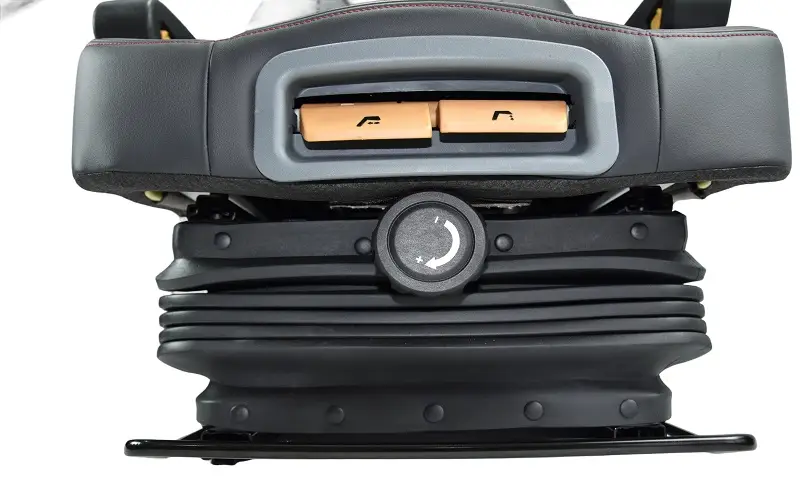
The frame is one of the key areas to examine when purchasing an industrial seat. Source One’s OEM industrial seat is designed for forklift and agricultural machinery applications. Its product specification includes a durable frame, waterproof PVC covering, mechanical suspension, forward and backward adjustment, adjustable armrests, and weight adjustment.
The product page lists a 60 mm mechanical suspension stroke and an 80 mm forward/80 mm backward slide range for the TB300 model. These functions show why corrosion protection belongs in the complete seat specification. Suspension systems, rails, brackets, and other metal components experience repeated movement and vibration during operation. If corrosion affects these areas, inspection, adjustment, and maintenance can become more difficult.
Protection Is Especially Relevant in Damp or Outdoor Environments
Not every forklift operates under the same conditions. Indoor warehouse equipment may have relatively controlled exposure, while forklifts used in loading areas, cold storage, manufacturing facilities, ports, or outdoor logistics environments can face larger changes in humidity, temperature, dust, and moisture.
Buyers should therefore consider where the seat will be installed before selecting a specification. Source One notes that anti-rust treatment can support seating applications exposed to damp environments and outdoor working conditions.
For a forklift operator seat, corrosion protection should be evaluated together with cover material, frame design, mounting arrangement, and suspension requirements. A seat may look suitable when new, but fleet purchasers also need to consider how its structural and functional components can perform after repeated environmental exposure.
Corrosion Protection Can Reduce Maintenance Pressure
Seat maintenance is one part of fleet management, but repeated component replacement can add cost and downtime. Rusted hardware, brackets, or exposed metal surfaces may require cleaning, refinishing, or replacement. Even when corrosion does not immediately cause a failure, it can make routine maintenance more difficult.
Protective coatings and other anti-corrosion treatments can provide a barrier between metal surfaces and the surrounding environment. The method depends on the application and expected exposure. Buyers should also consider whether the supplier can maintain consistent materials, production processes, and quality control across OEM orders.
What Buyers Should Check Before Ordering
A purchasing review should start with the working environment. Consider whether the forklift is used indoors or outdoors, whether the operating area is frequently cleaned, whether moisture or chemicals are present, and how heavily the equipment is used. Operator weight range, suspension needs, mounting dimensions, and adjustment requirements should also be confirmed.
A second step is to examine the seat structure and surface protection rather than judging corrosion resistance only by the upholstery. Metal frame treatment, exposed fasteners, brackets, rails, and suspension-related components deserve attention because these areas can affect the durability of the complete assembly.
Manufacturing capabilities are also relevant for OEM buyers. Source One states that its in-house production includes metal forming, welding, foaming, and related seat manufacturing processes. This can help OEM buyers maintain consistent specifications across seating programs.
Choosing Ergonomics Alongside Durability
Rust protection should not come at the expense of operator support. Forklift seats also need to accommodate posture, repeated movements, visibility requirements, and long working periods. Source One’s TB300 industrial seat combines mechanical suspension with an adjustable backrest, fore/aft slide, weight adjustment, and optional lumbar support and armrests.
For buyers seeking an ergonomic forklift seat, these functions offer a useful reference when evaluating the complete specification. A seat should be assessed for environmental resistance, operator support, and integration with the machine.
Rust Protection as Part of Long-Term Seating
Forklift seating is a working component, and its durability depends on materials, structure, environmental exposure, and maintenance. Rust protection matters because corrosion can gradually affect metal components that contribute to the seat’s strength and functionality. Considering this issue during procurement can help buyers address durability before corrosion becomes a maintenance problem.
Source One’s industrial vehicle seating portfolio is positioned around durable, application-oriented solutions for demanding work environments. For OEM manufacturers, distributors, and fleet operators, selecting the right seat means considering structural protection, ergonomics, suspension performance, material suitability, and service needs.
By including corrosion resistance in the purchasing criteria from the beginning, buyers can make a more informed decision about seat durability and maintenance while selecting a solution suited to actual operating conditions.
