Sustainable manufacturing requires more than efficient production equipment and responsible material sourcing. Lighting also plays an important role in energy consumption, operating costs, and workplace conditions. For manufacturers managing large industrial facilities, upgrading outdated lighting can be a practical step toward reducing environmental impact without compromising productivity. Modern LED systems offer opportunities to improve energy performance, simplify installation, and reduce maintenance demands, making lighting upgrades an important consideration in factory modernization strategies.
Why Sustainable Lighting Matters in Green Manufacturing
Industrial facilities often operate lighting for extended shifts, making electricity consumption a significant consideration in facility management. Replacing inefficient fixtures with LED alternatives can reduce energy demand while maintaining appropriate illumination for production, storage, and inspection tasks. The U.S. Department of Energy identifies energy efficiency, longer service life, and compatibility with lighting controls as key advantages of commercial and industrial LED luminaires.
A sustainable upgrade also addresses maintenance resources. Fewer lamp replacements can reduce technician hours, replacement-part purchases, and interruptions caused by maintenance work. When evaluating factory lighting, manufacturers should therefore consider both electricity savings and the ongoing costs of operating and maintaining the system, rather than focusing exclusively on initial equipment prices.
Choosing LED Light Trunking for Industrial Applications
Traditional industrial lighting installations can involve numerous individual fixtures, extensive wiring, and multiple connection points. These requirements may increase installation complexity, particularly in large workshops, warehouses, and logistics facilities where consistent illumination must cover extensive floor areas.
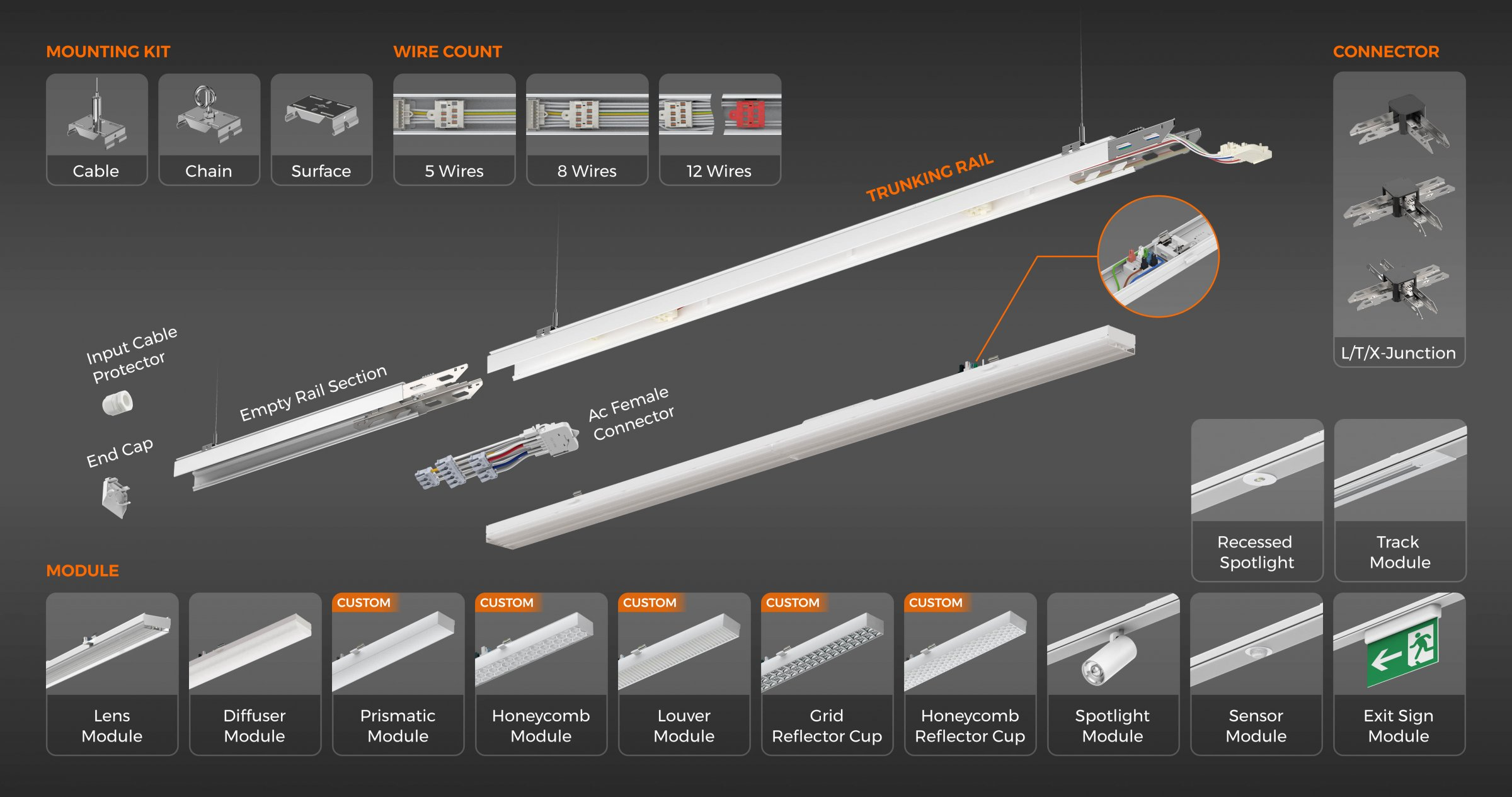
An LED light trunking system offers an alternative by integrating lighting into a connected infrastructure. Depending on its design, a trunking system can simplify fixture arrangement, support continuous lighting runs, and make installation more manageable across large spaces. However, project teams should verify electrical compatibility, mounting requirements, light distribution, and applicable safety standards before selecting a system.
For manufacturers planning a retrofit, the objective is to achieve suitable illumination with less installation disruption and a lower whole-life environmental footprint. Lighting calculations should account for ceiling height, equipment layouts, task requirements, and existing daylight conditions. These factors help determine whether a connected lighting system can meet operational needs without unnecessary energy consumption.
How TRIECO Supports More Efficient Lighting Upgrades
TRIECO specializes in LED lighting retrofits, offering integrated professional solutions for industrial facilities, retail stores, offices, and educational institutions. Its Fixed Style Trunking Light System is designed to address common challenges associated with conventional lighting installations, including complex wiring, difficult installation, costly maintenance, and limited functionality.
The system can reduce wiring costs by over 70% compared with traditional T8 batten lights and high-bay fixtures. This is a supplier-provided claim rather than a universal project outcome; actual savings depend on the existing installation, system configuration, and site conditions.
For facility owners, the potential value extends beyond wiring expenses. A coordinated system may simplify project planning and reduce the number of separate installation tasks. Its suitability for industrial plants, workshops, warehouses, logistics centers, data centers, and large retail spaces makes it relevant to organizations seeking a consistent approach across different facility types.
Before procurement, buyers should request project-specific specifications, including power consumption, luminous efficacy, light output, rated service life, and available control options. These details are necessary to compare performance objectively and estimate operating costs. The product information supplied for TRIECO does not establish numerical values for these technical parameters, so they should be confirmed for the selected configuration.
Measuring Energy Savings and Environmental Benefits
A successful sustainability project needs measurable performance targets. Facility managers can establish a baseline by recording existing fixture quantities, rated power, operating hours, electricity tariffs, and maintenance costs. They can then compare the proposed system against that baseline using consistent assumptions.
A straightforward estimate of annual lighting energy consumption is:
Annual energy use (kWh) = Total lighting power (kW) × Operating hours per year
Comparing the existing and proposed systems reveals the potential reduction in electricity consumption. For a more complete assessment, project teams should also consider installation costs, maintenance requirements, expected service life, and any additional investment in lighting controls.
Controls can improve results further when applied appropriately. Occupancy sensors, daylight-responsive dimming, and scheduling can help prevent lights from operating unnecessarily. The Department of Energy notes that these strategies can support additional savings alongside efficient LED equipment.
For companies reporting environmental performance, reduced electricity consumption can also lower associated greenhouse gas emissions, depending on the electricity supply. Documenting actual post-installation energy use allows sustainability teams to verify whether projected improvements have been achieved.
Planning a Cost-Effective Retrofit Strategy
The most effective upgrade begins with a site assessment rather than an equipment purchase. Facility managers should identify poorly illuminated areas, obsolete fixtures, maintenance bottlenecks, and zones with different operating schedules. Lighting designers can then establish appropriate illumination targets while avoiding unnecessary overlighting.
Installation planning is equally important. A phased retrofit may allow production to continue in unaffected areas, reducing operational disruption. Procurement teams should compare quotations using total cost of ownership, including equipment, wiring, labor, energy, maintenance, and eventual replacement.
For multi-site manufacturers, standardized factory lighting specifications can also simplify purchasing and maintenance. Consistent equipment across facilities may make spare-parts management easier and support repeatable installation procedures, provided the specifications remain suitable for each site’s individual requirements.
Building a Greener Manufacturing Facility Through Smarter Lighting
Sustainable lighting upgrades can help manufacturers reduce electricity demand, maintenance workloads, and long-term operating expenses while supporting suitable working conditions. The strongest results come from combining efficient equipment with careful lighting design, appropriate controls, and performance monitoring.
TRIECO‘s Fixed Style Trunking Light System presents one option for facilities seeking integrated lighting infrastructure and simpler installation. By assessing site requirements, verifying technical specifications, and calculating whole-life costs, industrial buyers can determine whether this solution aligns with their operational and environmental objectives.
