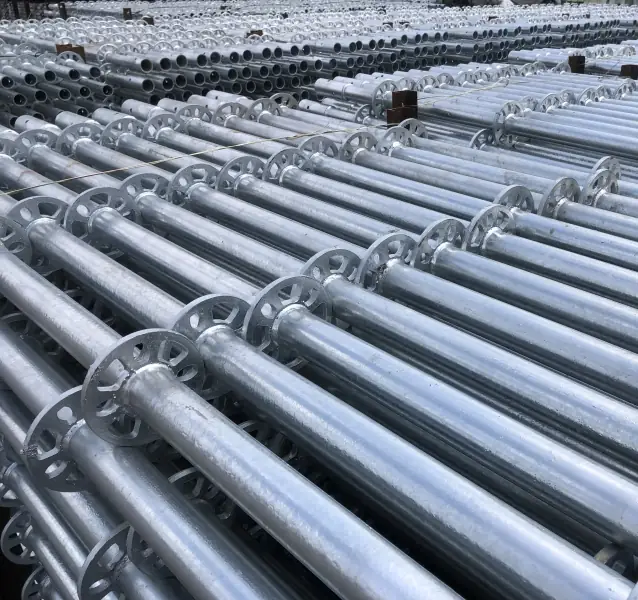
Commercial buyers evaluating modular temporary works frequently encounter wide variances when comparing initial commercial bids from different international suppliers. Understanding the underlying factors behind a specific ringlock scaffolding price quotation requires looking beyond surface-level figures to examine raw material grades, manufacturing precision, and corrosion protection methods.
While two systems may look virtually identical in catalog photographs, structural variations in steel tube wall thickness, rosette welding integrity, and zinc coating density dramatically alter ultimate load capacity, total service life, and long-term operating costs. Procurement teams collaborating with established supply partners like Rongze evaluate these technical variables carefully to ensure temporary equipment delivers maximum structural performance, regulatory compliance, and total cost-efficiency over years of field deployment.
Steel Grade Selection and Raw Material Costs
Substantial price differences stem primarily from the chemical composition and yield strength of the raw structural steel chosen for vertical standards and horizontal ledgers. High-grade carbon steel formulations, such as Q355 or Q235, provide high tensile strength and axial load resistance required for heavy-duty shoring and elevated access towers. Lower-cost alternatives often utilize uncertified or lower-grade steel alloys that feature inconsistent wall thicknesses and inferior yield thresholds under heavy mechanical loads.
Selecting high-strength Q235/Q355 steel material directly increases baseline manufacturing expenses, but it grants the temporary framework high structural stability and resistance against permanent deformation. Standardized wall thickness parameters enable engineers to calculate maximum allowable load limits accurately across complex spatial bay layouts. Investing in higher material specifications protects structural integrity during high-rise construction, preventing localized frame buckling when platforms support heavy material staging.
Protective Surface Finishes and Corrosion Resistance
Surfacing techniques applied to structural steel components play a decisive role in determining overall manufacturing costs and long-term durability on active job sites. Basic painted or cold-galvanized surface coatings offer low initial production costs but provide limited barrier protection against moisture, mechanical abrasion, and chemical exposure. Once surface paint chips during transit or handling, underlying carbon steel oxidizes rapidly, causing internal wall thinning that degrades structural load capacities.
Applying a hot-dip galvanized finish involves submerging pre-cleaned steel components into molten zinc to create a durable, metallurgically bonded protective barrier inside and outside the tube. Hot-dip galvanized for excellent anti-corrosion performance, this protective finish shields the underlying steel core against marine salinity, high humidity, and airborne pollutants. Higher initial processing costs for hot-dip galvanization deliver significant long-term savings by extending component service life over hundreds of deployment cycles without requiring frequent rust maintenance.
Manufacturing Precision and Quality Control Protocols
Automated manufacturing processes and rigorous quality verification protocols directly influence final equipment pricing while establishing component interchangeability across jobsite inventories. Production facilities utilizing advanced robotic welding lines create uniform, full-penetration welds around connection rosettes, eliminating micro-cracks and hidden cold joints. Conversely, manual welding techniques often result in inconsistent weld penetration, creating structural weak points that can fail under dynamic impact loads or heavy vibration.
Strict dimensional tolerance controls ensure that horizontal ledgers, diagonal braces, and vertical standards align seamlessly during field assembly without requiring forced fitting. Sourcing certified ringlock scaffolding produced under strict factory quality standards reduces spatial play within joint connections, preserving frame verticality across tall access towers. Comprehensive non-destructive testing, wall thickness verification, and third-party load certification add to upfront production costs but provide essential structural safety guarantees for site operations.
Connection Node Engineering and Load Capacity
Engineering complexity embedded within the modular rosette connection system creates additional variations in manufacturing cost and structural performance across different brands. The signature wedge-lock design utilizes precision-stamped rosettes and cast wedge pins to establish rigid 90-degree mechanical interlocks. Quick and easy installation with wedge-lock connection mechanics accelerates assembly sequences on site, allowing workers to secure ledgers firmly with basic tools while maintaining high structural rigidity.
High-capacity node designs transfer multi-directional dynamic forces smoothly down primary vertical axes, preventing localized frame sway during heavy concrete pouring or material transport. Systems featuring strong loading capacity and structural stability require precise metallurgical casting and tight forging tolerances for every wedge pin and rosette keyhole. These precision-engineered connection points prevent spatial deformation under severe dynamic loads, making high-quality modular systems far more durable than lower-tier budget alternatives.
System Flexibility and Multi-Project Utility
Evaluating long-term asset value involves assessing how effectively a modular inventory adapts to diverse project applications over multiple construction phases. Flexible modular design for various project requirements allows contractors to configure identical standard components for high-rise exterior access, heavy shoring falsework, industrial tank maintenance, and bridge pier construction. Modular versatility maximizes equipment utilization rates, allowing companies to offset initial capital expenditure across consecutive building contracts.
High component interchangeability simplifies inventory management in equipment yards, reducing material tracking overhead and preventing jobsite downtime caused by missing specialized fittings. Utilizing a safe and reliable modular platform for high-rise and heavy-duty applications eliminates the need to maintain separate access inventories for different building trades. Investing in a reusable and cost-effective scaffolding solution ensures contractors maintain lower long-term equipment investment costs while meeting strict international safety standards on demanding infrastructure builds.
Commercial Cost Factors Summary
Navigating equipment procurement options requires balancing initial capital outlays against lifetime structural reliability, site safety, and operational longevity. Examining a detailed ringlock scaffolding price breakdown reveals that higher initial commercial bids reflect premium Q235/Q355 steel grades, hot-dip galvanized protective finishes, automated robotic welding, and stringent factory quality verification.
Selecting standardized modular equipment built to exacting dimensional tolerances safeguards jobsite personnel while protecting project timelines against unexpected equipment failures. Utilizing engineered modular access inventory supplied by specialists like Rongze equips global contractors with high load capacities, superior corrosion resistance, and total structural confidence across complex commercial and civil builds.
