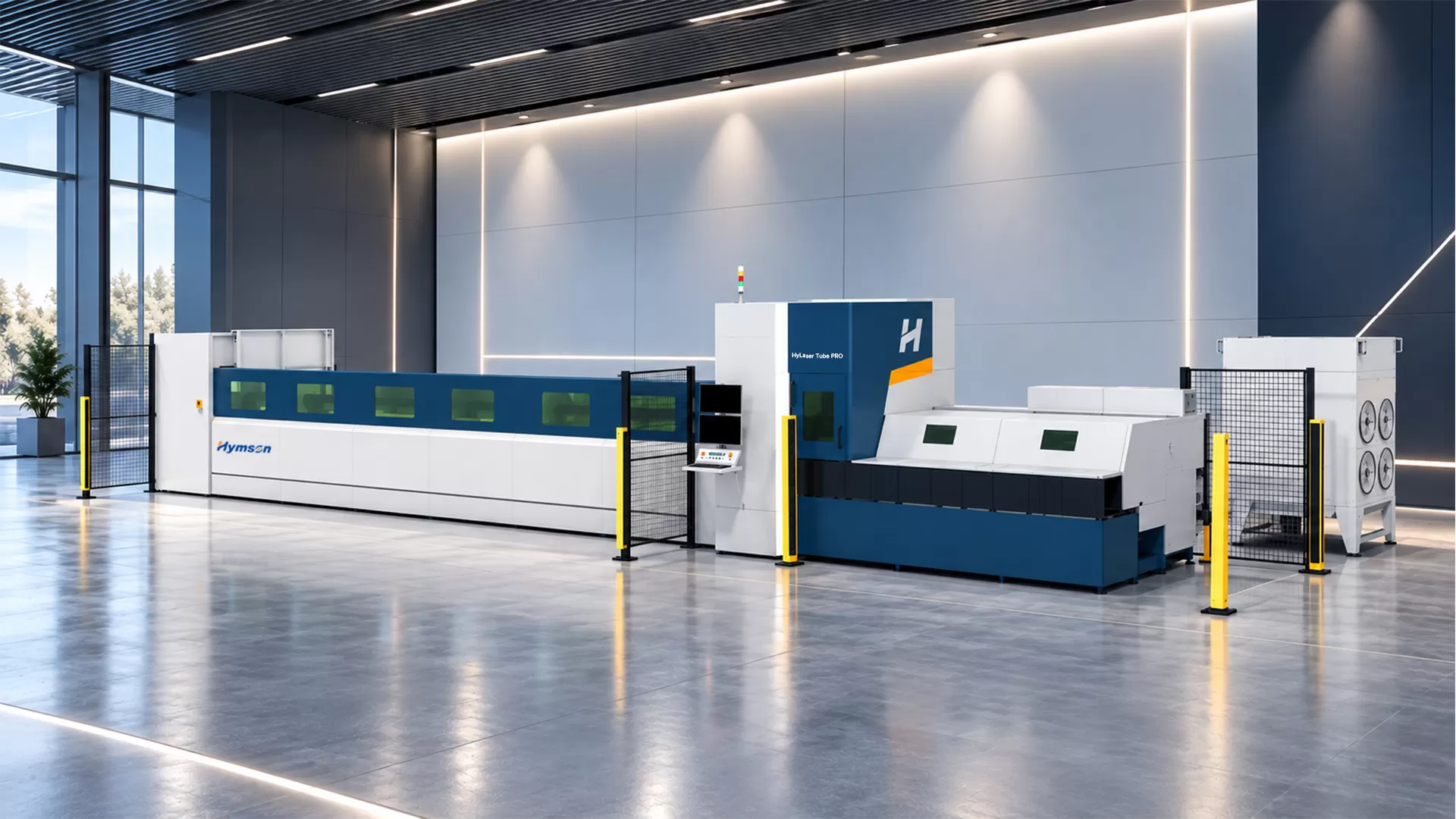
Small and medium-sized fabrication shops often face an unusual planning challenge: their orders vary considerably, but their production resources remain limited. One week may involve round steel tubes for furniture frames, while the next brings square profiles for machinery supports or rectangular sections for display structures.
Selecting a CNC tube laser cutter requires more than checking maximum dimensions or cutting speed; the equipment must match the profiles, batch sizes, and delivery rhythm that define everyday operations. Hymson Laser Machinery operates in industrial laser processing, where understanding the relationship between equipment capability and production requirements helps manufacturers make informed investment decisions.
Define the Actual Tube Range Before Selecting Equipment
The first step is to map the materials that pass through the workshop. Round, square, rectangular, and specially shaped tubes may differ in outside dimensions, wall thickness, length, and structural rigidity. A machine capable of handling one profile does not necessarily accommodate every other shape within a similar size range. Production records can help identify the most common combinations and distinguish routine work from occasional orders that may require special handling.
Maximum tube length and weight deserve separate attention. Long sections need sufficient support during loading and processing, while heavier stock places greater demands on material handling. Dimensional limits should be checked against the actual incoming material rather than only the finished part length, since loading arrangements and end allowances may affect whether a tube can be processed efficiently. Shops with frequent supplier changes should also consider whether their usual stock dimensions leave enough operating flexibility.
Wall thickness and material type influence process requirements as well. Mild steel, stainless steel, and other alloys may call for different cutting conditions, while thin-walled profiles can be more vulnerable to deformation during handling. A tube laser cutting system should be evaluated against the complete material mix, including the less frequent jobs that still matter commercially. This creates a more realistic basis for comparing equipment configurations than selecting a machine around one representative tube.
Match Capacity to Batch Size and Order Frequency
Order quantity often matters as much as the physical dimensions of the workpiece. Small batches may contain only a few dozen parts, with each order requiring a different hole pattern, length, or end cut. Under these conditions, programming, loading, setup, and job verification can account for a substantial share of total production time. Equipment evaluation should examine how these activities fit into the normal workflow rather than focusing exclusively on the time spent cutting.
Larger batches create a different set of priorities. Once a program and material setup have been validated, repeated production may benefit from stable handling and fewer interruptions. However, a machine configured mainly around long runs may be less convenient for a shop that frequently switches between profiles and customers. Production managers should compare the actual order distribution, including batch size and changeover frequency, before deciding which capabilities deserve investment.
Demand patterns can also expose hidden scheduling constraints. Several small orders may arrive together, each with a different deadline, while one urgent replacement component interrupts planned work. A practical capacity estimate should include programming time, material preparation, inspection, and the removal of finished parts. Tracking these activities across representative weeks gives managers a clearer picture of available capacity and helps prevent machine utilization from being overstated.
Evaluate Programming and Material Handling Together
Tube processing involves more than transferring a two-dimensional outline to the machine. Holes, slots, mitred ends, intersecting profiles, and angled cuts must be positioned accurately around the tube’s surface. Incorrect orientation or coordinate interpretation can place features on the wrong face, creating parts that look acceptable at first glance but fail during assembly. Programming tests should therefore use representative drawings with the same level of geometric complexity found in customer orders.
Material handling can influence accuracy throughout the cutting cycle. Tubes must be loaded in the correct orientation and supported appropriately as their weight distribution changes during processing. Long or slender profiles may behave differently from short, rigid sections, particularly when the cutting sequence removes material unevenly. Evaluating loading, clamping, rotation, and unloading together helps reveal whether the proposed workflow suits the shop’s available floor space and staffing.
Software compatibility is another practical consideration. Existing CAD files, drawing revisions, part libraries, and production instructions should transfer into the new workflow without creating unnecessary manual work. A trial involving several distinct part designs can show how easily operators prepare programs, verify feature positions, and retrieve the correct version for repeat orders. Such checks are especially valuable for small workshops where one employee may handle programming, machine operation, and quality inspection during the same shift.
Conclusion
Successful tube production planning begins with the work that actually enters the shop, not with an isolated machine specification. Material dimensions establish the required working range, order patterns determine the importance of changeover efficiency, and programming and handling tests reveal whether the process fits existing operations.
A CNC tube laser cutter should be assessed against these connected requirements so that capacity supports both current orders and realistic future demand. Hymson Laser Machinery participates in the industrial laser equipment sector, where application-specific evaluation helps manufacturers compare equipment with their production goals. Careful planning around the real tube mix and production cadence allows a tube laser cutting system to be judged by its practical contribution to workflow, quality, and material use.
