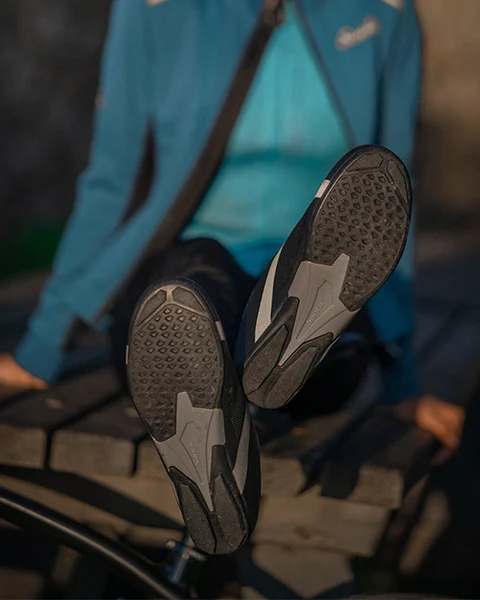
Maintaining reliable contact between feet and pedals determines how effectively power transfers during technical trail sections. High friction relies on the interaction between sole rubber compounds and pedal pin height, rather than mechanical locking systems. Equipping a ride with flat pedal MTB shoes provides freedom of foot placement while retaining firm traction on rugged ground.
Off-road riding demands constant weight adjustments to absorb chatter from rocks or tree roots. Selecting gear engineered by Santic allows cyclists to gain solid foothold control without sacrificing walking flexibility during trail stops.
Understanding Rubber Compound Density and Grip Dynamics
Sole traction begins with the hardness of outsole rubber, measured on a durometer scale. Softer rubber allows pedal pins to sink deeper into the sole structure, creating a mechanical interlock. Harder rubber lasts longer against sharp pins but offers less friction on wet granite or metal surfaces.
Finding the balance between pin penetration and sole longevity remains crucial for off-road riders. Rubber compounds engineered specifically for flat platforms absorb trail vibration, preventing feet from bouncing off pedals over quick bumps. Matching compound hardness to riding style improves control without premature wear.
Pin Placement and Platform Width Optimization
Pedal traction relies as much on platform surface area as it does on footwear design. Wider pedal bodies distribute rider weight evenly across the foot, reducing pressure hot spots. Arranging perimeter pins higher than center pins creates a concave feel that cradles the sole.
Tread patterns on dedicated cycling footwear feature dedicated pin channels to catch set screws reliably. Utilizing models like the Santic lock-free series gives riders engineered tread grooves that lock onto flat platform pins. This structural alignment reduces unwanted lateral slipping during heavy pedaling.
Sole Stiffness Balance for Pedaling and Walking
Extremely rigid soles maximize energy transfer during climbs but limit foot articulation when walking off the bike. Conversely, overly flexible soles cause foot fatigue during long descents as the foot bends around the pedal spindle. A mid-flex shank provides support under the arch while allowing natural heel-to-toe walking movement.
Riders seeking versatility across gravel and casual trails often evaluate the best gravel bike shoes alongside flat options. Flat pedal designs bridge this gap by incorporating semi-stiff internal shanks that support the foot arch without requiring cleat hardware. This balance enhances efficiency during pedaling while preserving ground comfort.
Active Ankle Dropping and Foot Position Techniques
Proper body mechanics enhance footwear friction significantly on rough terrain. Dropping the heel slightly on descents wedges the shoe sole between the body weight above and the pedal pins below. This angled pressure prevents forward foot slip when hitting unexpected trail obstacles.
Centering the ball of the foot slightly forward of the pedal spindle provides a stable base of support. Adjusting foot angle based on terrain slope maximizes rubber contact with pedal pins. Active weight distribution minimizes foot displacement across chatter sections.
Impact of Wet Weather and Mud Accumulation
Damp conditions introduce mud, water, and organic debris that fill sole tread voids, reducing surface friction. Open tread patterns clear packed earth quickly, allowing rubber to contact pedal pins directly. Hydrophobic upper materials stop moisture absorption, keeping footwear light throughout rainy outings.
Cleaning packed debris from tread channels preserves grip performance on wet rides. While riders searching for the best gravel bike shoes often weigh recessed cleat clearance against mud shedding, flat pedal soles rely on open lug spacing. Clear rubber channels ensure pedal pins bite directly into sole material.
Outsole Wear Patterns and Maintenance Practices
Sharp pedal pins gradually chew through outsole rubber over months of aggressive riding. Rotating foot positions slightly or replacing worn pedal pins prevents deep grooves from compromising sole structure. Inspecting soles regularly helps identify wear spots before pins puncture inner foam layers.
Washing away grit and trail salt prolongs rubber compound elasticity. Storing footwear away from direct heat prevents sole hardening, which reduces grip efficiency. Proper maintenance retains friction properties throughout the life of the footwear.
Selecting Proper Socks for Internal Traction and Stability
Traction inside the shoe matters as much as outsole grip against the pedal. Slipping socks cause foot sliding inside the toe box, reducing steering precision through feet. Technical synthetic or merino wool socks hold the heel securely in place during movement.
Densely woven socks prevent internal foot friction, reducing hot spots and blister formation. Secure heel pockets prevent ankle lift inside upper structures when lifting legs over trail features. Internal foot stability directly improves overall control over pedal platforms.
Transitioning Between Trail Disciplines and Casual Riding
Versatile footwear allows riders to transition from aggressive singletrack sessions to urban commuting without changing gear. Without protruding metal hardware, flat soles walk smoothly on tile, asphalt, and wooden decking. This flexibility makes unattached pedal systems practical for multi-surface adventures.
Riders who appreciate versatile gear often opt for flat pedal MTB shoes for mixed-terrain journeys. Casual styling combined with technical sticky rubber soles delivers functional performance on the bike alongside walkability off it. Embracing adaptable footwear simplifies preparation for diverse outdoor activities.
Put These Techniques into Practice
Maximizing traction on flat pedals comes down to a combination of thoughtful gear choices and active riding technique. Soft rubber outsoles, well-maintained pedal pins, and proper body positioning all work together to keep your feet locked in place across rough terrain.
Adjust your heel angle, clear mud from treads, and choose a sole stiffness that matches your riding style. Apply these practices on your next trail ride and feel the difference in control and confidence
