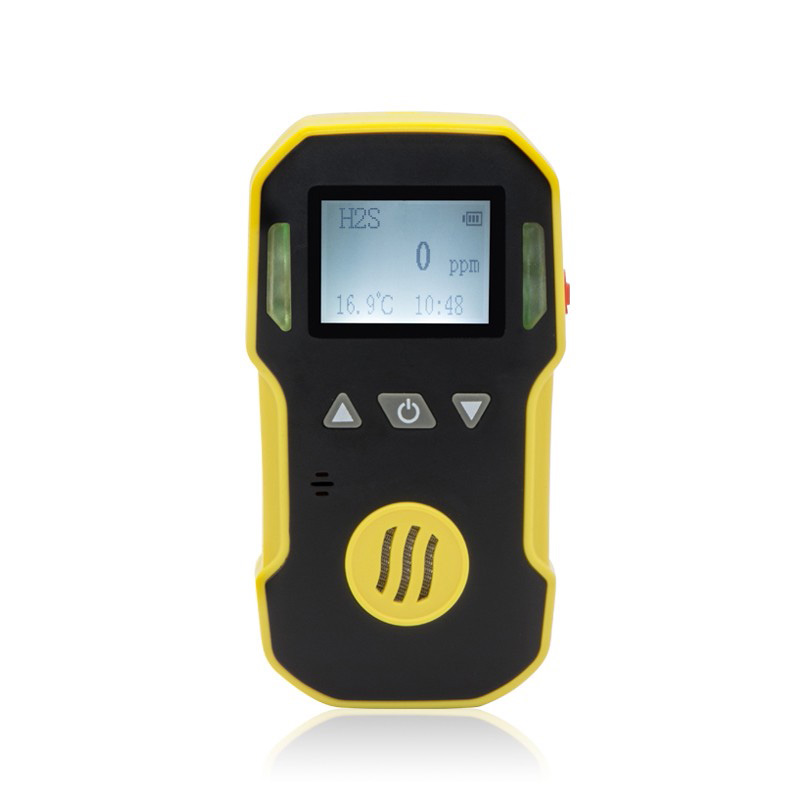
Industrial workers may encounter oxygen-deficient atmospheres, toxic gases, or combustible gases during routine tasks. These hazards can occur in manufacturing, chemical processing, refining, mining, wastewater operations, and confined spaces. Because conditions can change quickly, a personal gas monitor can provide workers with direct information while they move through the workplace.
Selecting one requires more than comparing sensor counts or prices. The monitor should match the hazard assessment, worker tasks, and operating conditions.
Start With the Gases You Need to Measure
The first question is which gases could realistically threaten workers. OSHA identifies direct-reading instruments as tools for detecting toxic gases, oxygen-deficient atmospheres, and combustible conditions. For permit-required confined spaces, OSHA requires atmospheric testing for oxygen, flammable gases and vapors, and potential toxic contaminants before entry.
A single-gas monitor may be appropriate when one known hazard dominates. Multi-gas equipment can be more suitable when workers may encounter several atmospheric hazards. The correct choice depends on process materials, ventilation, work activities, and risk assessment.
Avoid selecting a device simply because it detects more gases. Extra sensors do not automatically make a monitor safer if those measurements are irrelevant to the actual workplace.
Consider Personal Wearability
A personal monitor needs to remain with the worker throughout the task. Size, weight, display visibility, controls, alarm clarity, battery endurance, and housing durability can therefore influence practical effectiveness.
Workers may move between noisy machinery, dim areas, outdoor locations, or restricted spaces. Visual, audible, and vibration alarms can provide different ways to alert users when gas conditions become unsafe. OSHA also emphasizes that workers should not rely on smell to recognize hazardous gases.
Decide Between Diffusion and Pump Sampling
Sampling method should reflect the application. Natural diffusion allows surrounding air to reach the sensor without an integrated pump, making it useful for personal monitoring where the worker carries the instrument through the atmosphere being assessed.
Pump sampling serves a different purpose. It actively draws air toward the sensors and can support remote sampling through tubing or a probe. OSHA notes that active sampling can be used for remote assessment of hazardous atmospheres while the user remains outside the hazardous area.
For routine personal exposure awareness, diffusion may offer a straightforward configuration. For pre-entry assessment or locations that should not be entered before testing, a pumped instrument may provide greater operational flexibility.
Check Alarm and Display Functions
A monitor should communicate abnormal conditions clearly. Look for alarm functions that match the workplace environment, including audible, visual, and vibration alerts where appropriate. Workers should also be able to identify low battery, sensor faults, and other conditions that may affect measurement reliability.
The display should present readings in units appropriate to the selected gas. OSHA explains that handheld monitors can display concentrations in ppm, percent oxygen, or percent LEL depending on the measurement.
Alarm settings should be established according to applicable workplace requirements, the hazard assessment, and manufacturer instructions. Workers also need training on what each alarm means and what action is required. Clear procedures reduce hesitation when a warning occurs and help ensure the instrument supports, rather than replaces, established workplace controls.
Evaluate the Monitor’s Environmental Limits
Industrial workplaces can expose instruments to dust, moisture, temperature changes, impacts, and potentially explosive atmospheres. The monitor’s environmental specifications should therefore be compared with the actual working conditions.
The BH-90A Portable Single Gas Detector from Bosean, for example, uses natural diffusion sampling and provides visual, audible, and vibration alarms. Its manufacturer specifies an IP65 protection level, a weight of about 130 g including the battery, and dimensions of 100 × 60 × 30 mm.
The BH-90A is specified for combustible gas operation from −40°C to 70°C, while its toxic-gas operating temperature is −20°C to 50°C. It uses a 3.7 V, 1500 mAh lithium battery and is specified for at least 8 hours of continuous operation. Its response time is listed as less than 30 seconds, with sensor life of two years.
The model also carries an Ex ib IIB T3 Gb explosion-proof rating. These specifications should be assessed against the intended gas, hazardous-area classification, environmental conditions, and workplace procedures before purchase. Certification and suitability should always be verified for the exact application.
Prioritize Calibration and Functional Testing
Even a technically capable monitor cannot provide dependable protection if its sensors are poorly maintained. OSHA recommends procedures for testing and calibrating direct-reading monitors and states that a known concentration of test gas can be used to verify sensor response and alarm operation.
Maintenance should follow the manufacturer’s instructions and the organization’s safety program. Workers responsible for calibration should receive appropriate training, while records can document testing, calibration, repairs, and equipment readiness.
A pre-use check is important. Confirm that the battery is adequate, the display and alarms function correctly, and the device has no visible damage. A monitor should never be treated as reliable simply because it powers on.
Match the Monitor to the Work Process
Personal gas monitoring works best when it is integrated into the job rather than treated as a standalone device. Supervisors should determine when workers must carry monitors, which readings require immediate action, and how alarms connect to evacuation, isolation, ventilation, or emergency procedures.
Fixed detectors can provide continuous monitoring at selected locations, while portable monitors can follow workers into changing work areas. Combining both approaches may provide broader coverage where the risk assessment supports it.
About Bosean
Bosean was established in 2013 and specializes in gas detection and measurement instruments, serving industries including oil, chemical, refining, mining, gas, metallurgy, pharmaceutical, electronics, electricity, food, and municipal engineering. Its product range includes portable single-gas and multi-gas detectors, marine and mining detectors, gas leak detectors, fixed gas detection systems, gas alarms, nuclear radiation detectors, air quality monitors, and related equipment.
With its focus on industrial safety, environmental monitoring, and professional measurement, the company develops equipment around practical customer requirements. Its portable gas detector range gives industrial buyers options for different monitoring tasks, while its service and OEM capabilities support broader B2B applications. For help comparing sensor configurations, sampling methods, or workplace requirements, “Contact Us” to discuss an appropriate solution. You can also “Contact Us” when application conditions require a customized monitoring approach or additional technical guidance.
