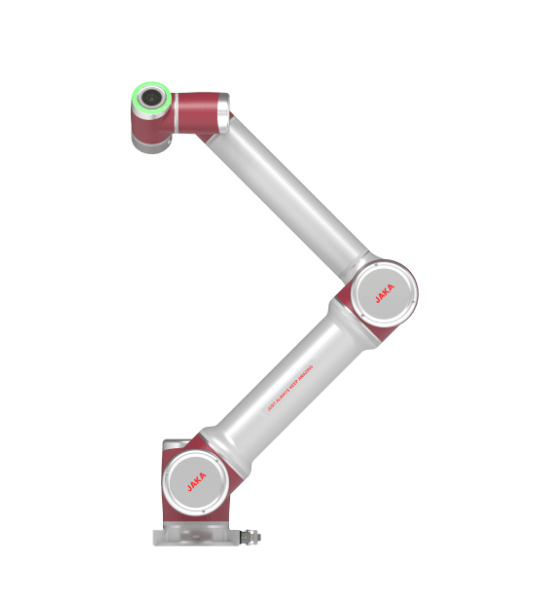
In the fast-paced world of modern manufacturing, the ability to pivot is just as important as the ability to produce. As product life cycles shorten and consumer demand for customization grows, fixed automation becomes a liability rather than an asset. This is where the 6 axis robot arm becomes a game-changer. Unlike rigid traditional systems, a collaborative robot cobot is designed to be a flexible tool—one that can be teaching a new skill in the morning and executing high-precision tasks by the afternoon.
However, the hardware alone isn’t enough to guarantee agility. To truly implement JAKA solutions effectively for fast repurposing, manufacturers must adopt a strategic approach to workspace design, software utilization, and modular tooling.
The Strategic Advantage of a 6 Axis Robot Arm
A 6 axis robot arm mimics the human arm’s dexterity, offering six degrees of freedom. This allows the robot to reach around obstacles, approach parts from complex angles, and operate in tight spaces that would be inaccessible to 3 or 4-axis machines. For JAKA, this mechanical freedom is the foundation of “repurposability.”
Whether it is the compact JAKA Zu 3 or the heavy-duty JAKA Zu 18, the Zu series provides a wide spectrum of reach and payload options to suit different stages of the production line. By having six joints, these robots can transition from a top-down pick-and-place task to a side-entry machine tending operation without needing to change the base mounting.
- Modular Hardware: Preparing for Change
To repurpose a collaborative robot cobot quickly, the physical setup must be as adaptable as the software. High-mix, low-volume manufacturers often lose time during the “changeover” phase—the period spent moving the robot and swapping tools.
Universal Mounting: JAKA Zu robots are famously lightweight. For example, the JAKA Zu 5 weighs only 23 kg. Because they can be mounted at any angle—ceiling, wall, or floor—they are often installed on mobile pedestals or AGVs. This allows a single 6 axis robot arm to serve multiple machines throughout a shift.
- Simplifying the Logic: Software and Programming
Traditional industrial robots require a specialized engineer to write hundreds of lines of code for every new task. This is the antithesis of fast repurposing. To implement a JAKA system effectively, companies should leverage the intuitive programming tools that come standard with the Zu series.
- Precision Standards Across the JAKA Zu Series
When moving a robot from a packaging task to a precision assembly task, accuracy cannot be sacrificed. Precise specifications are the bedrock of effective implementation. The JAKA Zu series is engineered to maintain high-performance metrics even after being redeployed multiple times.
JAKA Zu 3: With a 3 kg payload and a 626 mm reach, it is the specialist for small-part assembly and testing.
JAKA Zu 7: Offering a 7 kg payload and 819 mm reach, it strikes the perfect balance for most electronics and automotive applications.
JAKA Zu 12: Features a 1327 mm reach and a 12 kg payload, designed for larger work envelopes like palletizing or CNC tending.
JAKA Zu 18: The powerhouse of the range, handling 18 kg with a repeatability of ±0.03 mm.
By understanding these specifications, engineers can ensure that the collaborative robot cobot is never “over-stressed” or “under-utilized,” maintaining a relatively long fault interval.
- Safety and AI Integration: Ensuring Continuous Flow
One often overlooked aspect of fast repurposing is the safety assessment. Traditional robots require a new safety audit every time the fence is moved. A collaborative robot cobot like the JAKA Zu series simplifies this. With integrated torque-feedback and collision detection, the robot stops immediately upon contact with an object or person.
For advanced repurposing, the JAKA Lens vision system can be integrated. This allows the robot to identify new parts automatically. Instead of reprogramming the robot for every new part shape, the AI-driven vision system “recognizes” the workpiece, allowing for a truly “plug-and-play” experience across diverse production batches.
- Maintenance for High-Agility Environments
Frequent repurposing means the robot will be exposed to different joint stresses. JAKA’s design focuses on modularity even at the component level. The integral joint design makes the robots easy to maintain and, if necessary, easy to tear apart and rebuild for different configurations.
Regularly using the automated Load Identification feature within the JAKA Zu APP is vital. Every time you change the tool or the weight of the part, the robot should perform a self-calibration. This ensures that the torque limits are accurately set for the new task, protecting the motors and ensuring the 6 axis robot arm operates at peak efficiency.
Final Thoughts on Effective Implementation
Fast repurposing is not just a feature; it is a mindset. By choosing a JAKA Zu series robot, manufacturers are investing in a platform that evolves with their business. The combination of a high-dexterity 6 axis robot arm, intuitive app-based control, and industry-leading safety makes the collaborative robot cobot the ultimate tool for a resilient, future-proof factory.
When you remove the barriers of complex coding and rigid physical structures, the only limit to your automation is your imagination.
