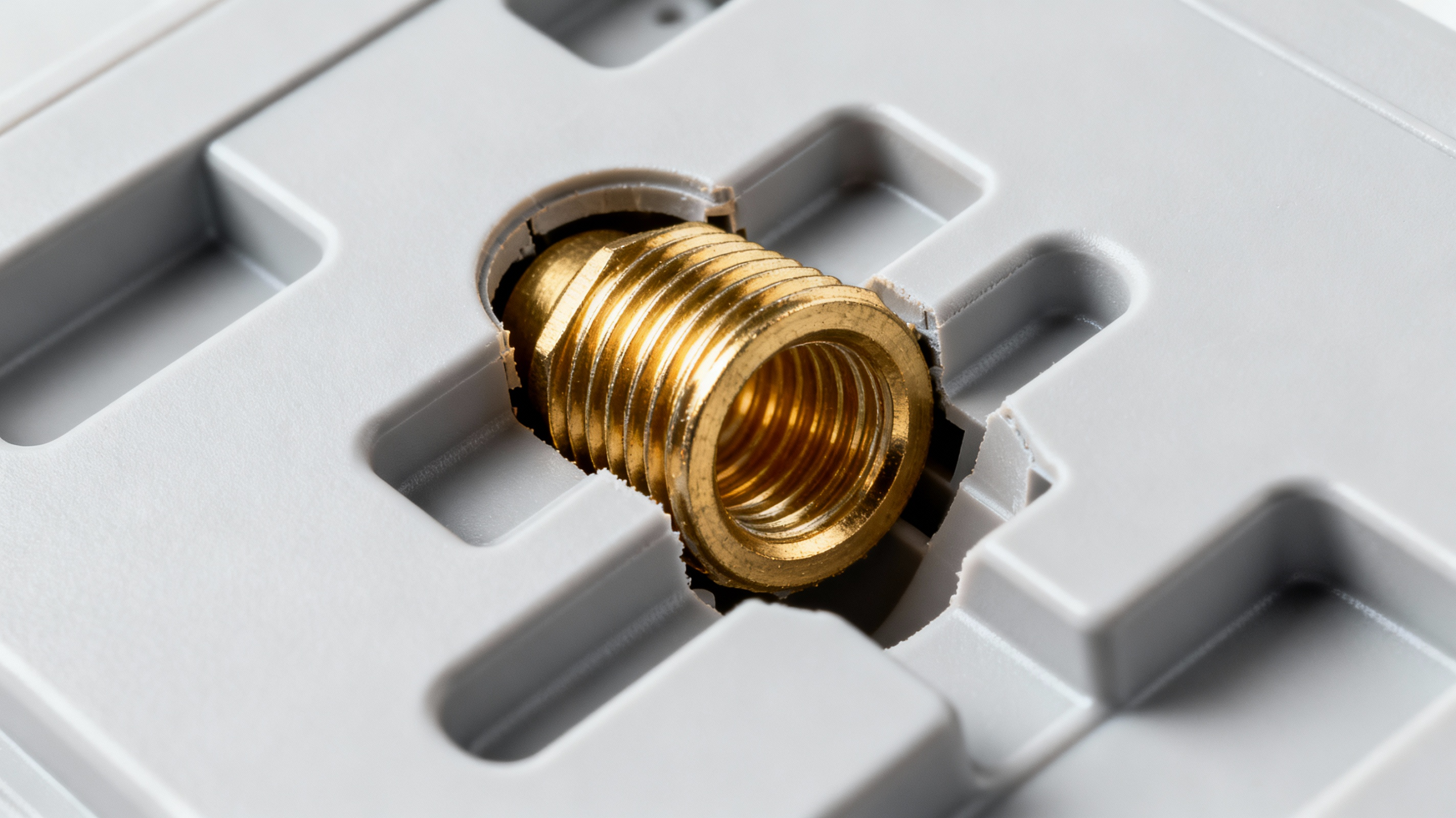
Sink marks are a persistent challenge in high-gloss plastic components, often caused by uneven cooling rates between metal inserts and the surrounding polymer. When low-conductivity metals like stainless steel retain heat, the adjacent plastic remains molten longer than the outer skin, leading to volumetric shrinkage and visible surface depressions. Utilizing brass inserts for plastic injection molding offers a scientifically grounded solution. The superior thermal conductivity of brass facilitates rapid, uniform heat dissipation, ensuring defect-free surfaces for automotive and consumer electronics applications.
Thermodynamics and Process Optimization for Brass Inserts
Optimizing the insert injection molding process requires strict control over thermal transfer rates and pressure curves. By leveraging the physical properties of brass and adjusting machine parameters, manufacturers can eliminate the heat accumulation that drives sink mark formation.
Leveraging High Thermal Conductivity (109 W/m·K)
The primary advantage of brass lies in its thermal conductivity, which typically ranges from 109 to 120 W/(m·K). In contrast, stainless steel conducts heat at approximately 16 W/(m·K), and carbon steel at roughly 50 W/(m·K). During the cooling phase, a stainless steel insert acts as a heat reservoir, keeping the surrounding plastic above its glass transition temperature for an extended period. This delay prevents the polymer from solidifying synchronously with the rest of the part, causing internal contraction that pulls the surface inward. Brass inserts rapidly transfer thermal energy into the mold core, allowing the polymer interface to freeze almost simultaneously with the exterior walls. This rapid equilibrium is essential for achieving Class-A surface finishes in insert molding solutions.
Precision Preheating and Pressure Profiling
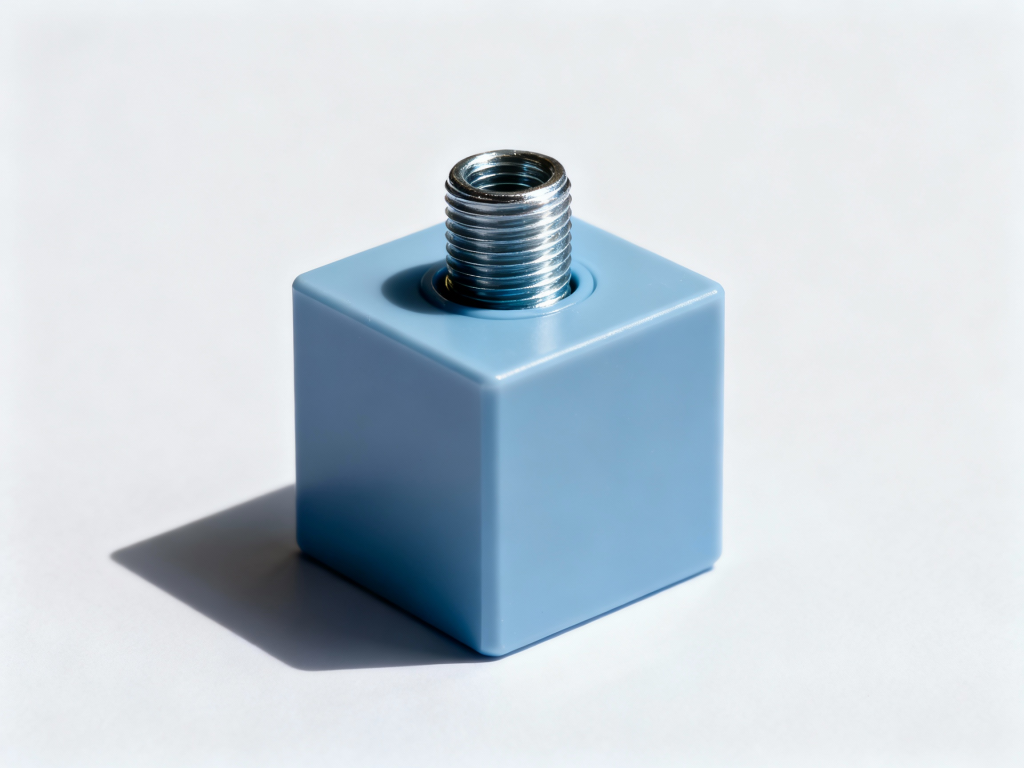
To further mitigate thermal shock and stress, injection molding threaded inserts made of brass should be preheated to between 80°C and 120°C, depending on the resin type. This temperature range helps match the insert to the melt temperature, preventing the “melt freeze-off” effect where plastic solidifies too quickly upon contact with cold metal. Furthermore, holding pressure must be calibrated to 50%–75% of the peak injection pressure. This specific ratio ensures that the screw continues to pack material into the cavity during the gate-freezing phase, compensating for the natural volumetric shrinkage of the polymer. A holding time calculated to cover 100% of the gate freeze time prevents backflow, ensuring the area around the insert remains dense and dimensionally stable.
Design Standards for Structural Integrity
Beyond process parameters, the physical design of the component and the mold plays a pivotal role. Adhering to specific wall thickness ratios and understanding the structural differences in insert molding vs injection molding ensures long-term part durability.
Wall Thickness and Geometry Standards
Preventing sink marks around injection mold inserts requires adhering to strict material distribution rules. The plastic wall thickness surrounding a brass insert should generally be 0.8 to 1.5 times the diameter of the insert. If the plastic wall is too thick, the core retains heat, causing voids; if too thin, the part risks cracking under stress. For threaded inserts for plastic injection molding, using a knurled or grooved outer geometry is standard to increase pull-out resistance and torque retention. However, these features must be designed to avoid sharp internal corners in the plastic, which act as stress concentrators. Positioning conformal cooling channels within 10mm to 15mm of the insert location in the mold tool further assists in extracting heat efficiently from these critical areas.
Comparative Durability: Insert Molding vs Injection Molding
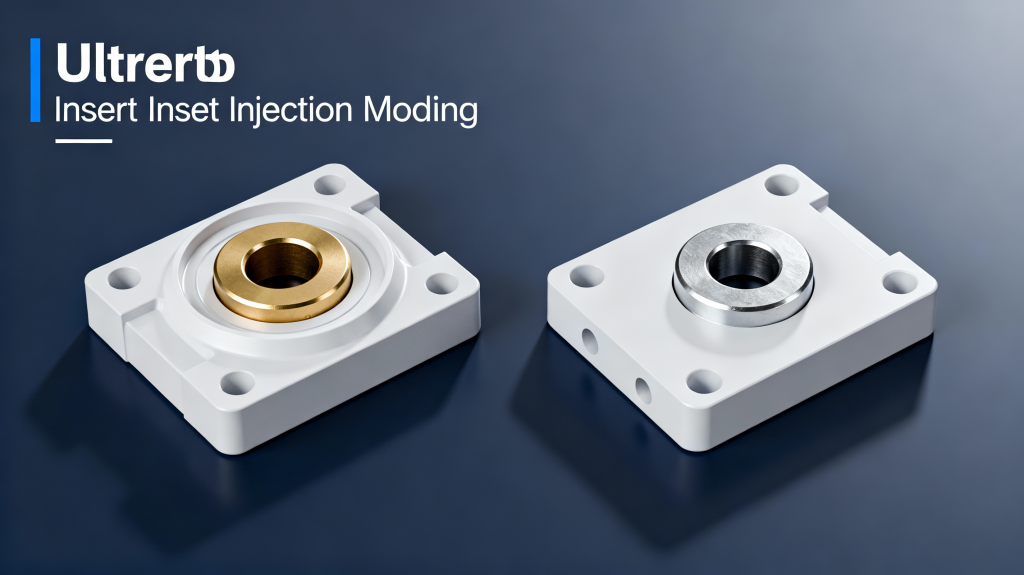
When evaluating insert molding vs injection molding (post-molding installation), the former offers superior mechanical integration. In insert molding, the plastic flows into the knurls and undercuts of the brass insert while molten, creating a solid mechanical interlock upon cooling. This results in significantly higher pull-out strength compared to heat staking or ultrasonic insertion used in standard injection molding. For high-volume production runs exceeding 100,000 cycles, the wear resistance of the mold tool itself becomes critical. While brass inserts are softer than the hardened steel of the mold, their non-abrasive nature preserves the cavity details over time, reducing maintenance costs compared to harder steel inserts which might gall or wear the locating pins.
Livepoint Tooling Manufacturing Capabilities
Livepoint Tooling provides comprehensive manufacturing services, specializing in high-precision mold making and injection molding. With over two decades of experience, the company supports clients from initial concept through to mass production, ensuring strict adherence to global quality standards.
One-Stop Manufacturing: Livepoint offers a seamless transition from rapid prototyping (via CNC or 3D printing) to full-scale insert injection molding. This integrated approach reduces lead times and ensures design for manufacturability (DFM) is addressed early.
Precision Tooling: The company utilizes advanced EDM and CNC machining to fabricate durable molds capable of tight tolerances. Their expertise extends to complex geometries required for automotive and medical devices.
Quality Assurance: Certified under ISO 9001 and IATF 16949, Livepoint implements rigorous quality controls. This includes monitoring thermal consistency and dimensional accuracy to prevent defects like sink marks in aesthetic parts.
Global Reach: Based in Shenzhen, Livepoint serves a global market, delivering specialized solutions for consumer electronics, smart acoustics, and industrial automation sectors.
Conclusion
Eliminating sink marks in insert-molded parts demands a synergy of material science and process control. By utilizing the high thermal conductivity of brass and partnering with an experienced manufacturer like Livepoint Tooling, engineers can achieve superior surface aesthetics and structural reliability. Contact the Livepoint engineering team today to refine your thermal management strategy and launch your next high-gloss product.
